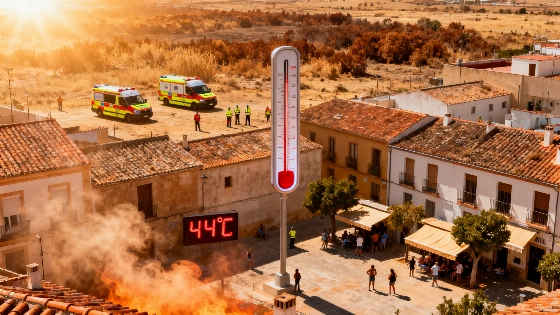
Spain is experiencing its first major heatwave of the year, with record-breaking June temperatures. Nearly 22 million people are now exposed to medium or high health risks. Authorities warn the situation will persist until late in the week.
Spain is enduring an unprecedented heatwave, with June temperatures reaching levels not seen since records began in 1950. According to José Ángel Núñez from Aemet, the country is now living through what may be the hottest June days in at least 75 years. The extreme conditions began on Sunday and are expected to persist until Thursday, with the western and northern regions likely to see relief before the Mediterranean coast.
The impact is already severe. Data from MoMo show that a heat episode at the end of May resulted in 101 deaths, marking the highest toll for May since 2015. On Sunday alone, 86 climate zones—covering 5,266 municipalities and nearly 21.9 million residents, or 46% of Spain’s population—were classified as facing medium or high health risk due to the heat.
Authorities are particularly concerned by the trend of heatwaves arriving earlier each year. Between 1975 and 2000, only two heatwaves were recorded in June. In contrast, from 2000 to 2025, that number jumped to ten, a fivefold increase. This shift signals a significant change in Spain’s climate patterns, with direct consequences for public health and daily life.
Underlying the current crisis is a steady rise in average temperatures. Since 1961, Spain’s mean temperature has increased by 1.75 degrees Celsius, a change attributed to the ongoing use of fossil fuels. This warming trend is making extreme weather events more frequent and intense, raising concerns about the country’s preparedness for future summers.
For context, Spain’s climate is classified as predominantly Mediterranean, with hot, dry summers and mild winters. However, recent years have seen a marked increase in both the frequency and severity of heatwaves. The Spanish government has implemented public health alerts and recommends that residents, especially vulnerable groups, take precautions during periods of extreme heat. These measures include staying hydrated, avoiding outdoor activities during peak hours, and monitoring local advisories. The current situation highlights the urgent need for adaptation strategies as climate risks intensify across the Iberian Peninsula.