The average age of cars in Spain will hit 14.6 years in 2025, with some provinces nearing two decades. Electrified vehicles remain rare, and the gap with Europe widens as renewal slows.
Spain’s cars are getting older. In 2025, the average car on Spanish roads will be 14.6 years old. That’s not just a number. It shows a growing split between regions and points to bigger problems with safety, pollution, and technology. In some places, the typical car is almost twenty years old.
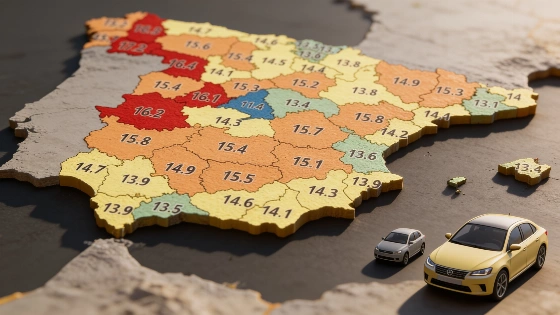
Ourense tops the list. The average car there is 17.2 years old. Zamora, Lugo, Ávila, and Cáceres all follow, each above 16 years. The northwest and western provinces are where this ageing hits hardest. In Castilla-La Mancha, parts of Aragón, and southern Extremadura, cars average between 15 and 16 years. Ceuta and Melilla also have some of the oldest fleets.
More than 62% of cars in Spain are now over 10 years old, highlighting the structural depth of the ageing problem.
Madrid is different. The average car there is just 11.4 years old. That’s much younger than anywhere else in Spain. Why? Higher incomes, more company headquarters, and lots of rental and leasing cars registered in the city. Madrid’s city layout and long-standing low-emission zones also push people to swap out old cars more often.
Barcelona, the Balearic Islands, Valencia, Málaga, and the Basque provinces come next. Their averages range from 13.1 to 13.7 years. The Mediterranean coast and the Ebro corridor do better than most, but even here, cars are older than the European average of 12.7 years. That’s according to ACEA data.
There’s another problem. Nearly a third of all cars in Spain are now over 20 years old. José López-Tafall, director general of ANFAC, calls this “preocupante.” The risks are clear. Older cars pollute more, lack modern safety features, and miss out on new driver assistance tech. The move to electric cars is also stuck. In 2025, pure electric and plug-in hybrids will make up just 2.4% of all cars in Spain.
According to official data from DGT and ANFAC, Spain has about 12.9 million cars older than 15 years out of a total fleet of 26.7 million, meaning nearly half of all vehicles are in the oldest age bracket. This structural ageing has led to record levels of vehicle scrapping by age in 2025, but the renewal rate remains too slow to reverse the trend.
This isn’t just about geography. It’s about money, jobs, and local rules. Madrid’s mix of wealth, business, and green policies has created a rare “oasis” of newer cars. In other regions, fewer incentives and slower economies mean people keep their cars much longer.
Drive across Spain and you’ll see the difference. In the northwest, old sedans and hatchbacks fill the roads. In Madrid, newer models and company cars are everywhere. The gap between Madrid and Ourense is almost six years. That’s huge.
Electrifying Spain’s car fleet faces a big roadblock. Without faster renewal, old cars will stay on the road. As reported earlier, higher prices and stalled direct sales models have already made it harder for buyers to get new cars. That slows the shift even more.
This crisis isn’t just about engines and exhaust. It’s about choices—economic and political. Data from Cartografía Digital, DGT, and ANFAC makes it clear. If Spain doesn’t speed up renewal, it will keep falling behind Europe in both emissions and road safety. Walk down any Spanish street. The age of the parked cars says more about the country’s real priorities than any official speech.