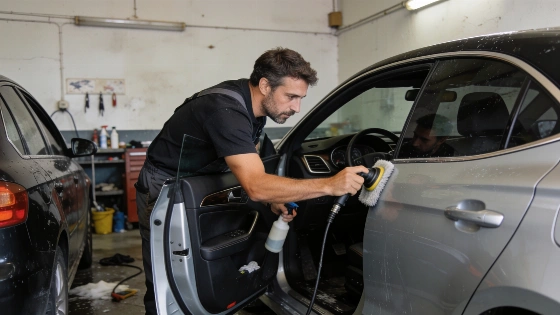
Manuel’s car-detailing shop in Spain turns three to five cars a day into as much as 15000 euros a month before expenses. He prioritizes quality over volume. One day, he billed 1600 euros in a single shift.
He started out ten years ago, washing cars for friends in his home garage. Word spread, and he soon needed more space. He rented a small shop with room for two cars and a small office. Rather than compete with automated washes, he specialized in detailing. Each job can take up to two hours for two people, while express washes elsewhere take 15 minutes.
Starting a small car-detailing business in Spain typically requires local permits and a “declaración responsable.” Official Spanish regulatory guidance also calls for zoning checks and technical documentation before operations begin.
His prices reflect the difference: a full detail costs about 80 euros. He introduced subscription plans to bring customers back, signing up 18 subscribers in just two months. Plans range from 15.99 euros for a quick clean to 45.90 euros for the full package. He puts his margins at 70 to 75 percent, though profits are reduced by salaries and supplies, as well as Spain’s self-employment fees.
Manuel says a detailing shop can be launched for 5000 to 10000 euros, a fraction of the 200000 euros or more needed for an automated wash. His approach is to offer a premium service and charge more per car: don’t chase volume; focus on value.
Not every month goes smoothly. A zoning issue involving signage and an old mezzanine shut the shop for almost a month. Manuel later proved the mezzanine was legal, but the closure still hurt. He treated it as a forced break.
Spanish regulatory authorities say service businesses that generate industrial waste, including those using chemicals and consumables, may face registration and waste-management requirements. Local rules can halt or sanction operations if premises fail to meet safety and environmental standards or comply with zoning rules.
On most days, Manuel brings in 300 to 500 euros. His best day brought in 1600 euros. He sees demand for specialized work in a market where many shops offer quick, impersonal washes. As he puts it: “Cuantos más metros, más facturas”; the more space, the more invoices.
Spain’s car-care market is changing, with some regions seeing more electric cars and new business models. Earlier coverage showed Málaga breaking into Spain’s top ten for electric-car registrations, pointing to broader changes in how people own and care for their cars.
Manuel’s results suggest loyalty and expertise can compete with scale in Spain’s service sector. A small shop can bring in large revenue by investing in skilled work and lasting client relationships. In a crowded field, specialization gives a business a way to stand out.