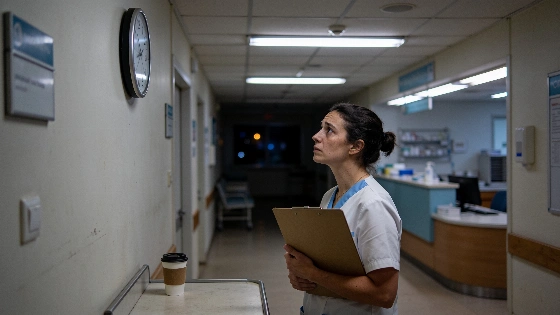
Spain’s government is pushing a landmark health reform to limit hospital shifts to 17 hours and curb chronic overwork. The draft law, now before parliament, could reshape working life for thousands of public health professionals if approved.
Seventeen hours. That would be the new legal maximum for a hospital shift in Spain under a proposed overhaul of public health employment rules—a sharp reduction aimed at ending the country’s long tradition of marathon medical guardias.
The government’s draft of the new Estatuto Marco, sent to parliament after approval by the Consejo de Ministros on September 1, 2026, does more than set a cap on shift length. It introduces a legal definition of "excessive workload": if a doctor or nurse is assigned more than five on-site shifts per month, health authorities must step in and add staff.
The official text also prohibits scheduling a regular shift immediately after an on-call duty if the combined hours exceed the legal limit.
For public health workers, the changes are direct and practical. The law would cap the working week at 45 hours, ban ordinary shifts right after a night on call, and guarantee that rest periods before and after a guardia count as paid time—without requiring staff to make up those hours later. These measures respond to years of complaints about burnout, unsafe schedules, and the erosion of work-life balance. The Ministry of Health says the reform is meant to address chronic overload and bring Spain’s working time standards closer to those in the European Union.
But the transition will take time. Regional health services would have up to five years to adjust staffing and organization, a move meant to avoid sudden pay cuts or disruptions in patient care. Services that currently exceed the 35-hour standard week would need to move gradually toward that target, balancing staff availability with the need to maintain care quality.
The reform also broadens the reasons for requesting exemption from guardias. Pregnancy, breastfeeding, reduced hours for childcare, health reasons, and—depending on local rules—being over 55 years old, all become valid grounds to opt out of night and weekend shifts.
The reform was introduced after prolonged negotiations and under the threat of an autumn strike by medical associations, who argue that the draft does not go far enough to resolve key issues for doctors. Meanwhile, major unions such as SATSE-FSES, CCOO, UGT, and CSIF have welcomed the move and are urging parliament not to delay its passage.
Temporary contracts, another persistent problem in Spain’s health system, are also addressed. The draft law requires that permanent positions be opened for competition every two years, with a maximum of 18 months to resolve each process. Economic compensation for abuse of temporary contracts remains, and voluntary mobility between regions would be streamlined, with annual assignment rounds and a two-year deadline for implementation.
The law is still a draft and could change in parliament, but its reach is broad: it covers shift limits, rest, staffing, job security, and the right to a sustainable career in public health. The official documentation is available through government channels, but the real impact will depend on how regional authorities apply the new standards.
Spain’s public sector reforms often take years and involve complex negotiations, as seen in other recent changes to civil service recruitment reported earlier. The five-year adaptation period reflects that reality, but it’s also a test: will the promise of better working conditions survive the slow pace of implementation?
What’s different this time is that the government has set clear numbers and deadlines for a problem that has dragged on for decades. If parliament keeps the proposals intact, Spain’s public health professionals could finally see a real change in how their time and well-being are valued. If not, the cycle of overwork and attrition is likely to continue.