Spain has met NATO's 2% defense spending goal after a 70% budget increase. Despite this, Donald Trump continues to criticize Madrid, highlighting deeper disagreements over military commitments and foreign policy.
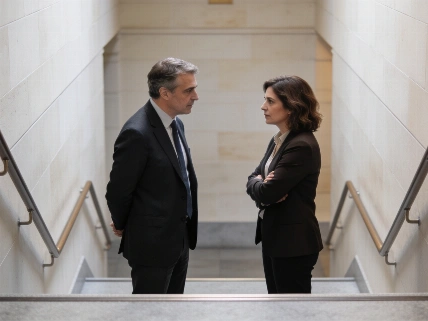
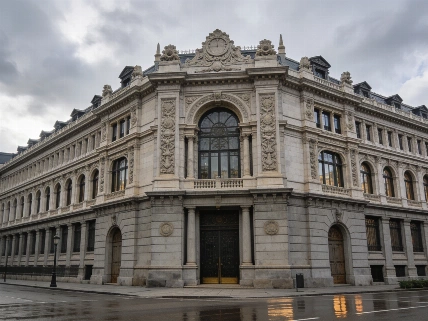
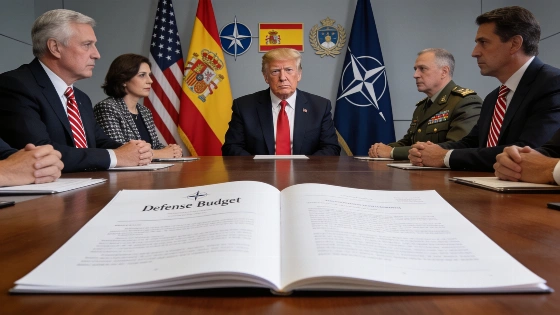
Spain has achieved the NATO benchmark of allocating 2% of its GDP to defense, following a significant 70% increase in military spending over the past two years. This move, which brought Spain's defense budget to $38 billion, positions the country as the eighth largest contributor in absolute terms among the 32 NATO members. However, the accomplishment has not shielded Madrid from renewed criticism by U.S. President Donald Trump, who, during a meeting with NATO Secretary General Mark Rutte at the White House, described Spain's commitment as insufficient and accused the country of expecting preferential treatment within the alliance.
Despite Trump's remarks, official NATO data indicates that at least three member states—Albania, Czechia, and Slovenia—failed to reach the 2% threshold last year, while Spain met the target. The alliance's annual report, presented by Rutte in March, initially suggested all members would comply with the Wales Summit pledge by 2025. However, diplomatic sources now acknowledge that these projections were overly optimistic, and NATO has requested additional documentation from the lagging countries ahead of the upcoming Ankara summit.
Spain's position within NATO has shifted notably since the government approved an extraordinary €10.47 billion boost for security and defense in April of the previous year. While Spain remains in the lower half of the alliance's spending rankings, it is no longer among the countries with the smallest defense budgets. Rutte himself has publicly recognized Spain's efforts, noting that Prime Minister Pedro Sánchez personally assured him of the country's intention to reach the 2% mark—a commitment that was fulfilled within the year.
The underlying source of friction, according to diplomatic insiders, is not Spain's actual spending but its stance on future commitments. At the NATO summit in The Hague last June, Sánchez was the only leader to openly reject the proposed goal of raising defense spending to 5% of GDP by 2035, which would include both military and security infrastructure expenditures. While several countries are unlikely to meet this ambitious target, Spain's explicit refusal has complicated Trump's efforts to present a united front among allies.
Rutte has attempted to mediate, stating that Spain is committed to meeting NATO's capability objectives, which may eventually require further increases in pure military spending. However, Sánchez maintains that these goals can be achieved with a 2.1% allocation, a point on which he and Rutte have agreed to disagree.
Spain has also announced additional contributions to NATO, including three aerial refueling aircraft, eight fighter jets, a frigate, and air defense systems. These measures are intended to help offset the reduction in U.S. forces available to NATO in crisis scenarios, as Washington urges European allies to take greater responsibility for their own defense and shifts focus to other regions such as the Indo-Pacific.
Another contentious issue has been Spain's refusal to allow the use of its Rota and Morón bases, as well as its airspace, for U.S. and Israeli operations against Iran. While this position is not unique among European countries—Trump has also voiced disappointment with Germany, France, the United Kingdom, and Italy—Sánchez is the only leader to have publicly opposed involvement in the conflict, further straining relations with Washington.
Spain's diplomatic isolation was underscored when Sánchez was not invited to a recent meeting in Berlin attended by the leaders of Germany, the United Kingdom, France, and Poland, where they discussed strengthening NATO's European pillar and support for Ukraine ahead of the Ankara summit. Nevertheless, diplomatic sources suggest that Sánchez is unlikely to become the main target of Trump's frustration, partly due to his strong relationship with Turkish President Recep Tayyip Erdoğan, who will host the upcoming summit.
Military cooperation between Spain and Turkey has deepened, highlighted by Spain's purchase of 30 Hürjet training jets in a €2.6 billion deal that will foster unprecedented collaboration between the two countries' defense industries. Additionally, Spain continues to maintain a Patriot missile battery on Turkey's border with Syria, a mission it has carried out alone for a decade. This deployment has proven valuable for monitoring drone and missile activity during recent conflicts involving Iran, the U.S., and Israel.
For broader context, NATO's 2% spending guideline has been a point of contention since its adoption at the 2014 Wales Summit. While most member states have gradually increased their defense budgets, disparities remain, often reflecting differing national priorities and economic capacities. The ongoing debate over burden-sharing and strategic autonomy within the alliance continues to shape transatlantic relations, as seen in recent developments involving Spain and its allies. For comparison, similar tensions over international commitments have surfaced in other arenas, such as the recent diplomatic maneuvering around the Egypt-Iran football match in Seattle, where broader geopolitical interests intersected with sporting events.