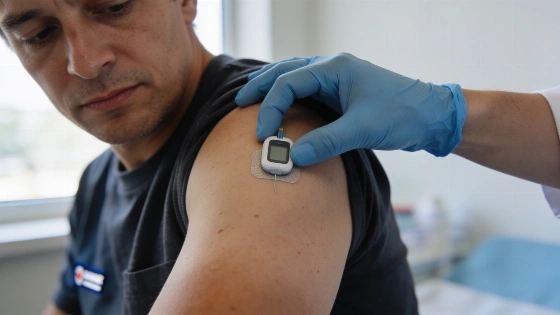
A reported Spanish consensus would make continuous glucose monitoring routine for some type 2 diabetes patients using basal insulin. International guidance supports considering CGM for insulin-treated patients, but the Spanish figures still need the source document.
The disputed point sits in the source material, not the technology. A Spanish consensus reportedly recommends continuous glucose monitoring for people with type 2 diabetes who use basal insulin.
The reported signatories are SED and SEEN. They also include SEMERGEN. SEMFyC and SEMG are named as the remaining organisations. The practical aim is to improve glucose control while reducing hypoglycemia and the disruption those episodes cause to patients and their quality of life. The official consensus text or a press release from the five organisations was not independently available in the reviewed sources.
The safety case comes with specific figures. The Spanish document is reported to link continuous monitoring with a 0.3 percentage-point overall reduction in HbA1c. Several real-world observational studies reportedly found reductions of up to 1.1 to 1.5 percentage points. The document also reportedly connects CGM with better Time in Range, lower glucose variability and less time spent in hypoglycemia. Those Spanish estimates still need checking against the consensus bibliography.
The ADA/EASD consensus reports that basal insulin analogues provide a modest but statistically significant reduction in HbA1c and in overall and nocturnal hypoglycemia compared with NPH insulin.
One number gives the proposal its sharpest clinical edge: hospital admissions for severe hypoglycemia reportedly fell by 45%. That percentage has not been independently confirmed from the official consensus or a directly identified supporting study.
Until now, CGM had its firmest place among patients using intensive multiple-dose insulin regimens. The reported Spanish document extends that role to people treated with basal insulin alone or alongside other non-insulin glucose-lowering medicines. Its authors assessed the evidence using the American Diabetes Association classification before setting rules for glucose targets and follow-up. They also addressed therapeutic education and possible withdrawal of the devices.
The wider international position is more measured. The joint ADA/EASD consensus describes basal insulin as a standard way to initiate insulin therapy and recommends considering CGM primarily for people with type 2 diabetes who receive insulin.
The Spanish document reportedly identifies six priority situations. The first involve difficulty managing glucose levels and severe or recurrent hypoglycemia. The others cover occupations where an episode could endanger the patient or other people, older or frail adults whose caregivers may need easier access to glucose information, people fasting for Ramadan and patients during pregnancy. These specific groups still require confirmation against the official Spanish document.
International evidence supports CGM use in insulin-treated type 2 diabetes, but ADA/EASD note that data for some CGM targets remain insufficient and that evidence for applying such targets universally is still developing. The international evidence review includes a 2024 meta-analysis by Uhl and colleagues in the Journal of Clinical Endocrinology & Metabolism.
Primary care sits at the centre of the proposal. The document is designed to give frontline doctors a direct role in prescribing and supervising these devices, bringing complex endocrine decisions closer to ordinary medical practice.
The Spanish Diabetes Society has pointed to a practical adherence problem. Multiple insulin injections and frequent capillary testing can lead to missed doses and temporary interruptions in treatment. For patients already struggling to maintain a routine, the monitoring burden can compound the treatment burden.
The financial case is also substantial, though it rests on a model rather than observed spending. One cost-effectiveness study reviewed in the document estimates lifetime savings of €15,645 per person. That total is attributed to reductions in acute complications worth €19,837 and chronic complications worth €4,069. The figures describe avoided complications, not a lower purchase price for the monitoring technology. The underlying study and model should be identified in the final reference list because the reviewed web sources do not independently verify these Spanish consensus figures.
For the first year, the analysis estimates a direct net saving of €980 per person through fewer cases of ketoacidosis and severe hypoglycemia. After adding lower microvascular and macrovascular complications, along with reduced work absenteeism, the projected health-system saving approaches €2 million a year among 1,000 assessed patients. These remain modelled economic projections, not observed savings independently confirmed in the available international sources.
Francisco Javier Ampudia-Blasco, endocrinologist and president of the Fundación SED, described the consensus as a step towards more proactive and personalised type 2 diabetes management. José Luis Portero, medical director of Abbott, said the cost-effectiveness evidence connects more stable glucose levels with fewer acute and chronic complications, emergency visits and hospital admissions. The statements form part of the Spanish consensus discussion, although the reviewed search results did not provide the full official press material for independent verification.
International guidance supports a broader role for CGM among insulin-treated people with type 2 diabetes, while warning that evidence strength varies by population and outcome. The Spanish effect sizes and priority groups remain tied to a consensus text or its underlying studies that were not available in the reviewed sources.