Spain’s government is racing to push through major social measures just before the election. With full control of the Boletín Oficial del Estado, Sánchez’s team is moving to lock in a big minimum wage hike and new pension boosts, putting rivals on the spot.
Pedro Sánchez is not waiting for election day to make his move. With time running out before Spain votes, the government is pushing a flurry of social decrees that could reshape the country’s economic rules and put pressure on political opponents.
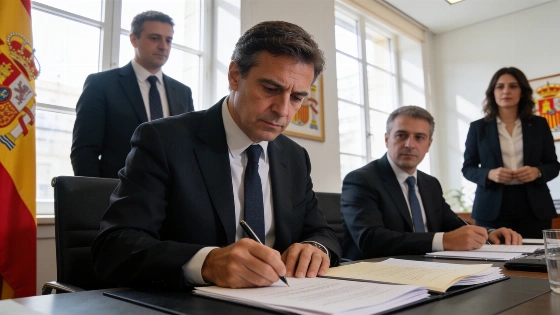
The plan is straightforward: use the executive’s grip on the Boletín Oficial del Estado to approve headline policies right up to the last minute. This week, Sánchez made his intentions clear after a Council of Ministers meeting, saying, “El Gobierno va a continuar gobernando.” The government keeps full authority until the vote. It can still validate decisions through the Diputación Permanente, as long as it has backing from the PNV and left-wing coalition partners—no need for Junts. Official government statements confirm that even after parliament dissolves on October 5, urgent decrees can go ahead if the standing commission signs off.
On October 6, the Council of Ministers approved two royal decree-laws on housing, with the first entering into force immediately and the second pending ratification by the Diputación Permanente.
The centerpiece is a major hike in the salario mínimo interprofesional (SMI). Yolanda Díaz is already moving to formalize the increase, signaling that the government will keep ramping up wages. Since Mariano Rajoy left office, the SMI has jumped 66%. The new hike is meant to be so big that even a future PP and Vox government would find it hard to reverse without paying a steep political price. Still, official government communications say the exact numbers for the next SMI increase are not locked in yet and will need more negotiation.
Pensions are also in play. Normally, increases are announced at the end of the year, but the government is weighing whether to move up the timeline or at least make public promises before the election. The pattern is familiar: pensions have tracked the IPC, and minimum pensions have grown even faster. This approach draws a sharp line with Vox, which calls the pension system a “zombie,” and with the PP, which hints at reforms but with less force. Government sources say any formal announcement on pension indexation will need more parliamentary support and is not final yet.
Other ministries are working flat out to line up more social measures for the next Council of Ministers meetings. The playbook echoes the “viernes sociales” from the last legislature, a clear contrast to Rajoy’s “viernes negros” austerity days. The government wants to keep the spotlight on housing, social spending, pensions, minimum wage, healthcare, and education—areas where it thinks the PP is weakest. The latest housing package includes 21 measures: tax breaks for tenants, incentives for landlords who offer affordable rents, €280 million in guarantees for industrial construction, and €400 million in aid for social housing providers, according to the Ministry of Housing.
A separate decree provides for the extension of rental contracts for up to two years for tenants who meet their obligations on time, and also limits rent increases. The government has acknowledged that there is currently insufficient parliamentary support for this second measure, so it will not take effect simultaneously with the first housing decree.
But it’s not clear if these last-minute decrees will sway voters. Political strategist Antoni Gutiérrez Rubi points out that while some see these moves as desperate, a key group—those who swing between PP and PSOE—actually expect this kind of action. “These changing voters can be sensitive to those positive decrees,” he says. On the other side, the right’s message is simple: “echar a Sánchez.”
Housing is still a flashpoint, especially for younger voters. The government hopes its emergency decrees and the new “decreto Maricarmen” will connect with generation Z, but it knows it’s tough to deliver real results in time. The general strike set for November 11, focused on housing, adds more tension. The executive wants the strike to look like a protest against the PP, but as Gutiérrez Rubi notes, “All strikes by definition are against governments.”
International events could also shake up Spain’s campaign. From the US midterms to Brazil’s elections, the left faces tough headwinds abroad, and Sánchez’s edge as a candidate is checked by a broader rightward shift in Western politics.
The PP is already rolling out its own plans. Alberto Núñez Feijóo has promised to reform sick leave laws, a move that will likely spark debate among workers. The government’s tactic is to force the opposition to take clear stands on social policy, betting that these issues will set the tone for the campaign.
For those following Spain’s shifting legal and economic scene, the current maneuvering brings to mind other recent moves, like the recent breakdown of inheritance tax strategies that have fueled debate over property and wealth transfers.
What’s clear is that the government is using every tool it has to shape the pre-election agenda and lock in social gains. Whether these moves will tip the scales with voters is still up in the air, but Sánchez’s team is betting that bold action on wages, pensions, and housing will set the terms for the final weeks before Spain votes. With the right focused on ousting Sánchez, the government’s best shot is to keep the campaign on ground where it still has the upper hand. The results will show if last-minute policy can turn the tide for the left.