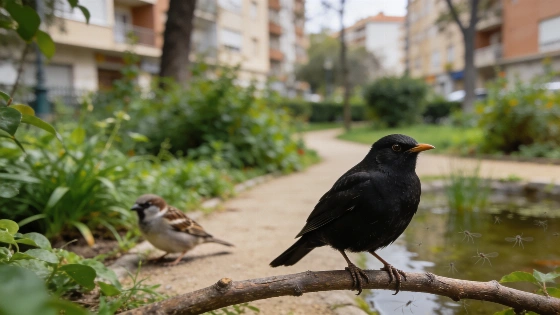
A CSIC study found more antibodies in urban birds during years with human West Nile outbreaks. Blackbirds and sparrows could help show where the virus is circulating in Spain.
Between 2003 and 2024, researchers collected samples from 19,105 birds across 30 locations in Huelva, Sevilla, Cádiz and Málaga. The data points to urban birds as a possible early warning for West Nile virus in Spain.
The CSIC-led study found that antibodies were more common in city birds during years when people contracted the virus. That does not make birds a diagnostic test for humans. It gives health teams another way to track circulation alongside mosquito sampling and reports of human cases.
In years with human West Nile cases in Andalusia, serological evidence increased among urban birds, while researchers did not find the same rise in birds from natural habitats.
The research teams at EBD-CSIC, CISA-INIA-CSIC and CIBERESP found evidence that West Nile virus has circulated in Andalusia since at least 2003. The virus does not appear only during isolated epidemic seasons.
Antibodies against the pathogen appeared in 2,182 birds from 41 species. The study, published in One Health, found that exposure varied with age, body size, migration patterns and habitat. The clearest link with human outbreak years appeared among birds living in urban areas.
That difference matters because virus activity does not rise evenly across cities, forests, scrubland and other habitats. The common blackbird (Turdus merula) and house sparrow (Passer domesticus) are useful for regular checks because they stay close to homes, gardens and public parks.
The researchers recommend a One Health model that connects urban-bird surveillance with mosquito monitoring and human case reporting. In Andalusia, this broader surveillance framework has also been expanded through the PEVA strategic plan, in operation since 2024.
The study also links exposure to several biological traits. Adult birds from larger species had antibodies more often. The researchers suggest that their greater heat, carbon dioxide emissions and odour signals may attract more mosquitoes. Beak length also had a connection with exposure. Migratory species differed from sedentary ones, and first-year urban birds showed higher seroprevalence than some birds from forests and scrubland.
Human cases show why earlier environmental signals could matter. Spain recorded 77 confirmed cases and eight deaths in 2020. In 2024, the figures rose to 158 infections and 20 deaths.
Spain and Andalusia already combine veterinary, entomological and human surveillance. The system includes risk mapping and mosquito control. As earlier reporting on Spanish public-space disputes shows in a different context, location can shape the response. Here, the relevant divide is between urban and non-urban habitats.
Bird monitoring cannot replace mosquito sampling or medical reporting. It can add another signal. The Andalusian PEVA plan, active since 2024, gives authorities a framework for coordinating these measures.
The evidence supports a focused approach. Blackbirds and sparrows are not a standalone answer, but they could show where the virus is circulating before the full number of human cases becomes clear. The study covered 19,105 birds over two decades, which gives the urban signal enough weight for closer attention.
Antibodies show that birds had previous contact with the virus. They do not diagnose infection in people. Laboratory testing, mosquito sampling and official epidemiological reporting remain necessary.