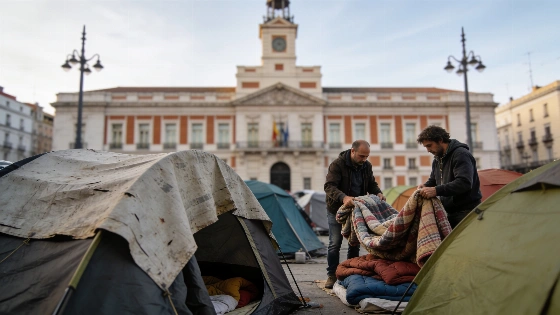
A 48-hour deadline to remove the Puerta del Sol housing camp has expired. Madrid is now asking the courts to order its immediate dissolution, while the Delegación del Gobierno says police have no grounds to intervene without disturbances.
A 48-hour deadline set by the regional government expired without the Puerta del Sol camp being removed. The Comunidad de Madrid has now taken the housing protest to court.
Isabel Díaz Ayuso announced a contencioso-administrativo appeal with a request for medidas cautelarísimas. Madrid says the Delegación del Gobierno failed to act. The regional government wants the court to order the camp's immediate dissolution.
The dispute is now legal.
The central question is who can order the protest to end. The Comunidad argues that the demonstration was not notified in advance. It says the camp has become permanent and indefinite, threatens public order and amounts to the unlawful occupation of public space.
The camp followed a housing demonstration on 26 September that drew about 25,000 people, according to the Delegación del Gobierno. The protest was linked to the eviction of 87-year-old Maricarmen and calls for measures referred to by demonstrators as the “decreto Maricarmen”.
The protest has entered its fifth day.
The camp is organised around the right to housing. Protesters are expected to remain at least until Friday, although no clear end date has been set.
Madrid says the tents obstruct access to the Real Casa de Correos, the headquarters of the Madrid government. The regional government also says the camp affects commercial activity in central Madrid and damages the city's image as a quality destination.
The Delegación del Gobierno has stressed the right of assembly. It says the National Police has no basis for intervening while there are no disturbances. The camp remains.
The administration had already sent a formal requirement to Francisco Martín, the delegado del Gobierno, demanding action. Miguel Ángel García Martín, the regional councillor for the Presidency and government spokesman, warned that Madrid would seek judicial measures if the request was ignored.
Ayuso has now confirmed that step. She says Martín refuses to order the evacuation.
Estimates of the camp’s size during its first night varied between roughly 200 and 500 people, with reports referring to around 100 to 150 tents. The differing figures reflect changes in the number of people remaining in Puerta del Sol after the march.
A second dispute concerns alleged disorder at the site. José Luis Martínez-Almeida said the camp could not be described as peaceful because images showed paving stones and large knives.
The mayor said he would send the document containing those images to Francisco Martín and Interior Minister Fernando Grande-Marlaska. RTVE has had access to the document. The available reports do not establish that the objects shown were used in disturbances at the camp.
The images and Almeida's interpretation have become part of the political fight.
The camp is part of a wider housing dispute. An earlier Sol report covered that background in an earlier Sol report. The immediate question here is narrower: will the courts accept the Comunidad's request for urgent protection before negotiations or a voluntary departure changes the situation?
Madrid has not announced a completed eviction. It has asked the judiciary to authorise an immediate dissolution. The Delegación del Gobierno has not carried it out.
That leaves two authorities at odds. The regional government is demanding removal. The central government's representative has not ordered it.
The court will have to examine the claims about the camp's permanence, public order, access to a government building and disruption to commercial activity. The housing cause remains the stated reason for the protest.
Until a judge rules, the basic fact is unchanged. The camp remains in Puerta del Sol. Its removal is being sought, not carried out.