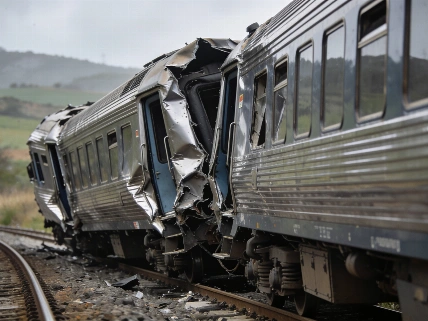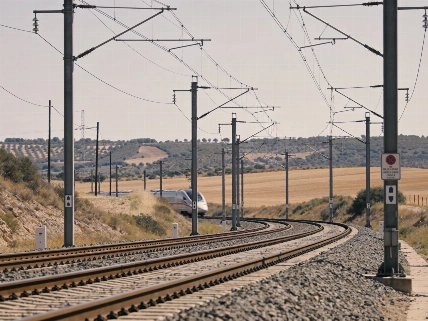
A leaked exchange from Adif’s Atocha control centre recorded an instruction for a Renfe AVE to continue at normal speed before it collided with an Iryo near Urda on 28 October. The crash, on the Madrid-Seville high-speed line in Toledo, derailed several carriages. Railway sources say controllers at the centre went from managing 15 high-speed trains at once to 40 as Ouigo and Iryo joined Renfe in the market.
At about 08:30 that morning, an outage affected the line-side LZB train-protection system near Urda. The fail-safe automatic protection system stopped trains in the affected section. Transport Minister Óscar Puente said the infrastructure failure prompted manual intervention and that the Renfe train was then authorized to continue, although the track ahead was occupied. Railway Gazette reported that a serious communications failure is central to the early investigation. Disruptions can force controllers to make rapid decisions, whether caused by infrastructure failures such as the one reported in Toledo or by a train breakdown. The account does not establish that increased workload caused the collision.
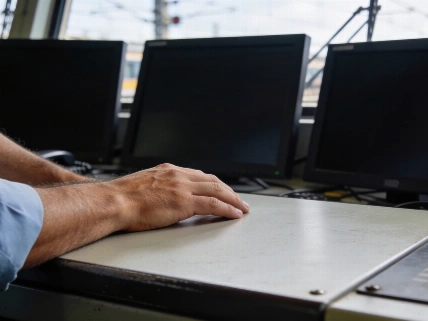
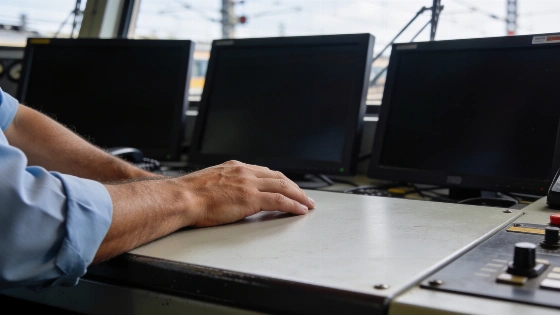
Adif’s Atocha centre has 118 staff working across three shifts and seven circulation posts. Two people were assigned to the post where the worker gave the instruction. The Madrid-Sevilla route is reinforced with two technicians because of the volume and complexity of its traffic. Puente said the worker had an assistant and a supervisor nearby. El País reported that Adif has about 3,700 people in traffic management across around 20 control centres nationwide. The company said roughly 500 positions had been created since 2018 to reinforce train-traffic control. CSIF representative Pedro Poves, meanwhile, said the number of circulation-responsibility posts remained at 18, the level he associated with 2019.
Across high-speed routes where operators compete, average daily services rose from 31.4 in 2022 to 58 in 2025, according to Adif sources. The increase has put pressure on control teams, while operators need trains to meet planned timetables. When schedules are missed, Adif faces penalties through infrastructure-use charges after operators receive complaints from passengers. Adif manages the infrastructure used across the high-speed market, where Renfe competes with Iryo and Ouigo.
The leaked exchange was also covered in an earlier audio report. Spain’s Railway Accident Investigation Commission (CIAF) opened an investigation, and the Civil Guard questioned the Adif traffic operator involved in the control-centre actions before the crash. The account leaves responsibility for the collision to be assessed by the judicial investigation and the Autoridad de Investigación de Accidentes Ferroviarios.
Unions have objected to the focus on the individual worker. CCOO called on 29 October for Puente’s immediate dismissal and demanded a rigorous, transparent investigation. The union said the death toll had reached 69 and criticized the release of recordings involving railway professionals, warning against assigning blame before the investigation was complete. CCOO said Puente had blamed workers and called for his immediate dismissal. Francisco Cárdenas, UGT’s Renfe representative in Catalunya, argued that scrutiny had turned to the worker too quickly, given that other elements, including the safety system, had also failed.
SEMAF criticised the public accusation against the worker. Its secretary general, Diego Martín, also pointed to heavier workloads and less experienced staff. UGT’s Antonio Tobal, the union’s safety representative at Adif, said the operator was trained for the role but relatively inexperienced.