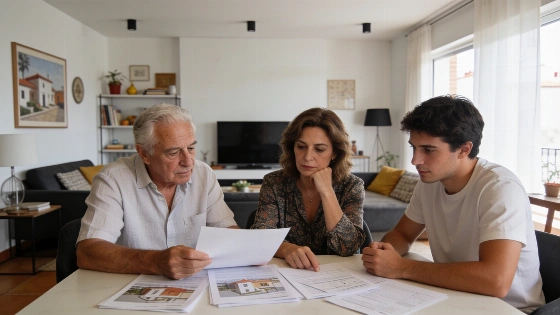
A Spanish lawyer has outlined a legal method that could let families transfer property to heirs while sidestepping the country’s inheritance tax. The approach, involving the donation of bare ownership with lifetime usufruct, is gaining attention for its potential to reshape how inheritances are handled.
Many Spanish families worry about losing their homes to inheritance tax. For some, the numbers just don’t add up. Pablo Ródenas, a lawyer who shares legal tips online, has drawn fresh attention to a workaround that could help families keep property in their hands.
His method is direct. Parents hand over the 'nuda propiedad'—bare ownership—of their home to their children. They keep a 'usufructo vitalicio', the right to live in the house for life. Ródenas explains it simply: “You become the official owner of the house, and they continue living in it as if nothing has changed. When their time comes, the property passes to you automatically, without notary intervention, legal disputes, or the dreaded inheritance tax.”
In Spain, the taxable base for a bare ownership transfer is calculated only on the value of the transferred share, not the full property value, which can significantly reduce the immediate tax burden compared to a standard inheritance.
This setup splits the property into two rights. The children get bare ownership. The parents keep the right to use and enjoy the home for as long as they live. This isn’t just theory. Spanish law recognizes the arrangement. Parents can even rent out the property if they want. The children, as new owners, can’t take full control until the usufruct ends—usually when the parents pass away.
But there’s a catch. Ródenas warns that giving bare ownership isn’t always tax-free. Gift tax, municipal capital gains tax, and possible income tax can still apply, especially if the property isn’t the main home. The real savings depend on the parents’ age, the property’s value, the family’s situation, and the rules in their region. Several Spanish legal analysts point out that this approach only works well in some places. Some regions offer big tax breaks for close relatives. Others keep rates high.
Location matters. In parts of Spain, inheritance taxes are already low or close to zero. There, this strategy won’t change much. In regions with higher taxes, transferring bare ownership early can shrink the taxable value. The parents’ retained usufruct lowers the property’s assessed worth. When the usufruct ends, the children get full ownership. They don’t pay inheritance tax again.
In regions like Andalusia, a 99% inheritance tax bonus already applies between parents, children, and spouses, and from 2027, this will extend to siblings. However, in other autonomous communities, the rules and tax reliefs can differ dramatically, so families must check local regulations before proceeding.
Families trying to navigate Spain’s property laws now have another option. Ródenas’s approach could help some keep their homes. But the risks are real. As seen in the recent Madrid foreclosure case, legal missteps can cost everything.
This isn’t a one-size-fits-all fix. The bare ownership and usufruct split only works under the right local tax rules and family conditions. It can cut inheritance tax, but it won’t erase every bill. Careful planning is key. For Spanish families hoping to keep property in the family, knowing these legal details matters more than ever. More people are looking at these strategies. The rules are changing. But so is the need for clear, region-specific legal advice before making any move.