Nearly a third of cars in Spain are now over 20 years old. Breakdowns are becoming routine, and experts warn that outdated vehicles and skipped maintenance are putting drivers and families at risk.
More than nine million cars in Spain are now over 20 years old. That’s a 7.2% jump, and these ageing vehicles make up almost 30% of all cars in the country. The average passenger car is now 14.6 years old, according to the latest numbers from Anfac and Ideauto. This isn’t just a statistic—it’s a warning for anyone who gets behind the wheel.
Breakdowns have become part of daily life. The Real Automóvil Club de España (RACE) responded to 120,248 roadside calls in July and August alone. Most of these—77%—were for engine trouble, tire problems, or dead batteries. Engine failures led at 31.5%, tire issues at 24.8%, and battery breakdowns at 20.7%. These aren’t just numbers. They mean real danger for drivers, passengers, and everyone else on the road.
According to official DGT data, over 29 million of Spain's more than 37 million registered vehicles are now older than nine years.
Summer makes things worse. Heat, long trips, heavy loads, and worn tires all speed up wear and tear. RACE’s Barómetro de Averías points out that high temperatures and damaged tires make breakdowns more likely. “The thermal and mechanical demands on tires increase with heat, incorrect pressure, or prior damage, speeding up deterioration,” the club notes. After summer, many cars go back to daily use in far from perfect shape.
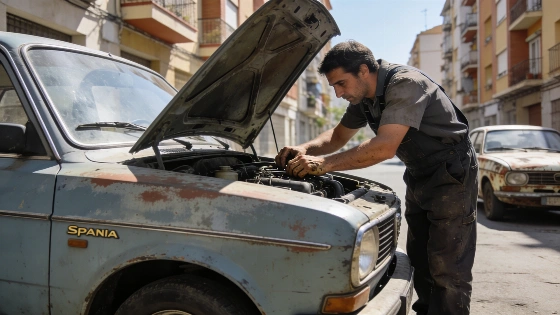
Francisco Javier Suárez, a veteran mechanic and workshop owner, says cars often give warning signs before breaking down. “Many times, the vehicle warns that something is wrong. The most common mistake is to keep driving as if nothing happened—or worse, to attempt a DIY fix or seek a quick patch-up,” he told RAC 1. He warns that modern cars are full of complex tech, and bad repairs can put everyone in the car—and on the road—at risk.
Warning signs aren’t always hard to spot. A sweet smell could mean a coolant leak. A burnt odor might point to brake trouble. Odd noises, especially over bumps or rough roads, can signal suspension problems. If your car sounds like a plane taking off as you speed up, your tires might be deformed. Suárez says if a dashboard warning light comes on—especially with smells, vibrations, power loss, or overheating—the safest move is to pull over and call for a tow. Ignoring these signs can turn a small problem into a big, expensive one.
Industry association ANFAC warns that the ageing of Spain's vehicle fleet is not limited to passenger cars: about a third of all vehicles, including commercial trucks and buses, are now over 20 years old, with the average age rising in several regions above the national figure.
Regular checks are getting harder for most drivers. You can still keep an eye on oil, coolant, washer fluid, and tire pressure. But most other checks need a pro. The Dirección General de Tráfico (DGT) says to check the suspension every 30,000 kilometers, change brake fluid every two years or between 40,000 and 60,000 kilometers, and swap engine oil and filters every 5,000 to 30,000 kilometers, depending on your car.
If you’re shopping for a used car, maintenance history and transparency matter as much as price. As reported earlier, hidden risks and missing information are now big worries for buyers in Spain’s ageing car market.
The facts are clear: Spain’s cars are getting older, and it’s showing up in breakdown stats and safety warnings. Old vehicles, skipped maintenance, and hotter summers mean more breakdowns—and more danger—on the road. Until more drivers switch to newer, better-kept cars, everyone will need to stay alert. The industry is under growing pressure to tackle a problem that can’t be ignored any longer.