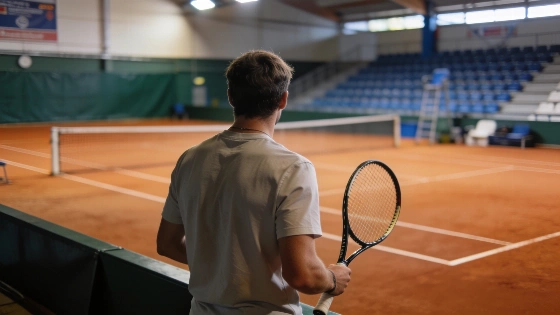
Spain will open its Final 8 campaign against Austria in Bolonia on 24 November. David Ferrer's team could bring back its leading singles and doubles players before the November showdown.
Spain now knows the route it must take to reclaim the Copa Davis. David Ferrer's team will face Austria in the quarter-finals in Bolonia on 24 November. A win would send Spain into a semi-final against Germany or Great Britain. It would leave the team two wins away from the trophy it last lifted in 2019.
The draw offers no easy route to the final. Alexander Zverev is the most in-form player in the Germany and Great Britain section. Italy waits on the other side as the leading favorite. The Italian team has won the last three editions, in 2023, 2024 and 2025.
Spain enters the Final 8 as the second seed, which means it cannot meet host and defending champion Italy before a possible final.
Jannik Sinner's return could be decisive if Spain reaches the final. The tournament already has a clear shape before the first ball is struck. Spain faces a demanding quarter-final, with the defending champion waiting beyond it.
Ferrer's biggest question is not the draw. It is the squad he can take to Bolonia. Carlos Alcaraz and Marcel Granollers missed the previous tie, even though they are the team's leading figures in singles and doubles. Both could return for the Final 8.
That change would immediately lift Spain's status. With Alcaraz and Granollers back, and Rafa Jódar continuing to emerge, Spain would become one of the strongest contenders alongside Italy.
Austria and Spain reached the Final 8 through qualifying: Austria defeated Belgium 3-1, while Spain beat Chile 3-0. The final stage will be held in Bolonia from 24 to 29 November 2026.
The contrast with the Mediterranean weather report is clear. This time, the issue is not disruption but selection. Ferrer must decide whether Spain can arrive with the two leaders who missed the previous tie.
Austria is more than the first name on the bracket. It is the first test of whether Spain's potential strength can become real competitive strength. Germany and Great Britain are the next possible obstacle. Italy remains the target that sets the scale of the challenge.
The official Davis Cup draw has turned Spain's route from a projection into a confirmed bracket. The other quarter-finals are Italy against South Korea and Czechia against Canada. The winner of Spain-Austria will face the winner of Great Britain-Germany in the semi-final. Italy, the host and defending champion, will begin its title defense against South Korea. The Korea Republic team is making its first appearance in the Final 8, according to the published tournament coverage.
Spain is the second seed. Germany is third, and Czechia is fourth. That seeding keeps Italy away from Spain until a possible final.
The route is difficult but clear. Spain has Austria first, a possible semi-final against Germany or Great Britain next, and a likely meeting with Italy for the trophy. Based on the available facts, Spain's chances will depend less on the draw than on whether Alcaraz and Granollers return and how quickly Jódar secures his place. Ferrer's final selection is therefore the central story of Spain's campaign.
The format leaves little room to recover. Each tie is played in one day and includes a maximum of three matches: two singles rubbers, followed if necessary by doubles. Tennis Canada described the November meeting with Czechia as part of the same Final 8 structure. The Davis Cup's official announcement confirmed Bolonia as the venue for the finals from 24 to 29 November.