Electric car travel in Spain is getting easier. The REVE map now gives drivers live updates on charging station locations, availability, and prices—making it a must-have for anyone who wants to avoid wasted detours and long waits.
If you drive an electric car in Spain, your trip now depends on one tool: the REVE map. This platform tracks more than 44,700 public charging points in real time. For EV drivers, it’s become the go-to way to avoid running out of battery or finding every charger already taken.
REVE was built by Red Eléctrica and is backed by the Ministry for the Ecological Transition and the Demographic Challenge (MITECO). It does more than just show where chargers are. The map gives up-to-the-minute details on each station’s location, whether it’s working, and what it costs to use. This is especially important for high-speed chargers, where spots fill up fast and downtime can throw off your plans. The Spanish government says the REVE map launched on September 14, 2026, as part of the Marco de Acción Nacional. Now, drivers can check both availability and prices in real time for nearly 44,700 charging points across Spain. The rollout also brought new road signs to help drivers find charging stations along national roads.
Recent independent reviews highlight that there are approximately 3,964 high-power charging points (≥150 kW) in Spain, and stations marked as out of order or blocked are excluded from the REVE map's live availability counts.
Using REVE is simple. You type in a destination, route, or town, and the map shows all nearby public charging options. Each entry lists the power, connector type, hours, and any special access rules. Not all chargers are the same—some are for quick stops, others for longer charges. Prices are shown, but the final cost depends on the operator, how you pay, and the current tariff. MITECO and several industry reports say REVE is now the main national tool for showing both the location and real-time status of each charger. This matters most for long trips and for picking between standard and fast charging.
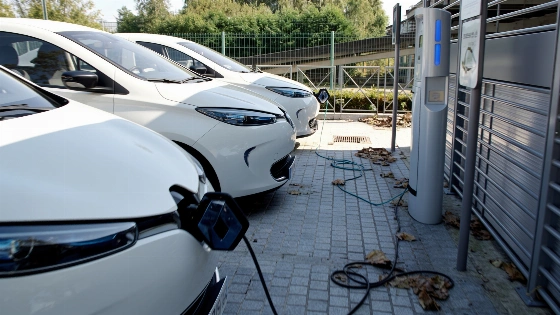
Spain’s public charging network is growing fast. The latest official count is 42,318 public access points, with a total nominal power of 2,269,170 kilowatts. MITECO says this already beats the minimum power required by European rules for Spain’s fleet of electrified light vehicles. But the challenge isn’t just adding more plugs. The real test is spreading them out smartly and boosting capacity along main highways. This is set out in the National Action Framework for alternative fuels and the National Integrated Energy and Climate Plan, which aims for 5.5 million electrified vehicles by 2030. Independent reviews using REVE and MITECO data show a wider coverage—between 44,390 and 44,700 points, about 49,391 connectors, and 13,726 locations as of early September 2026. The numbers vary because different sources count "points," "connectors," and "locations" in different ways. This can change how drivers read the stats.
Even with the best map, drivers know there’s no guarantee a charger will be free when they arrive. A spot might look open on REVE but be taken or out of order by the time you get there. The safest move is to double-check with the operator’s own app or website before you set off, especially for long trips where one mistake can cost hours. This was clear during the recent Repsol EcoRallye in Galicia, where teams ran into real charging problems, as reported earlier.
Alongside the REVE launch, MITECO opened a public consultation on a new package of measures for charging infrastructure, including a €150 million support program and new requirements for installing chargers at parking lots and fuel stations. These consultations are open until late September or early October 2026, depending on the document.
Spain’s electric mobility network is at a key moment. The technology is ready, the network is growing, and real time planning tools are better than ever. But what matters is how well these systems work together on the ground. For now, REVE gives drivers a clear, practical way to plan trips and avoid surprises. As Spain pushes toward its 2030 goals, being able to plan electric journeys without guesswork will shape the next stage of the transition. Independent analyses say the main challenge now isn’t just the number of chargers, but where they are, how much power they deliver, and whether they actually work—gaps that REVE is built to help close.