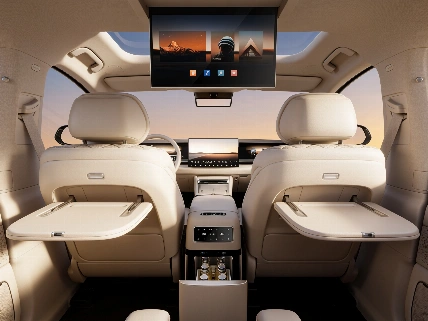
Spain’s government car fleet has swelled to 700 vehicles and 900 drivers under Pedro Sánchez, but the rush to electrify is running into a wall of missing charging stations and daily headaches.
Spain’s official car fleet has grown at breakneck speed since Pedro Sánchez took office. The Parque Móvil del Estado (PME) now manages about 700 vehicles and employs 900 drivers, a scale that is stretching logistics to the limit. The PME’s own annual report for 2025 puts the actual vehicle count at 666, with 559 of those carrying the ECO or Cero emissions label. That means roughly 84% of the fleet is now classified as low-emission, a figure backed up by independent data.
Most of these cars are hybrids or fully electric, paid for with money from the European Union’s Next Generation program. The goal was to modernize and cut emissions from the state’s transport. In reality, more than 80% of the fleet now sports an Eco or zero emissions badge, but many of these vehicles spend their days parked, either plugged in or waiting for a free charging spot. PME’s official numbers show the ECO/Cero fleet grew by 18 cars in 2025, showing the government is still pushing for electrification.
Despite the growing share of electrified vehicles, PME’s total fuel consumption actually rose by 12% in 2025, while electricity use for charging dropped by over 15%.
The real snag is infrastructure. Government buildings across Spain simply don’t have enough charging points. Plug-in hybrids and electric cars often sit idle, sometimes never even charged. The PME’s drive to modernize has outpaced the country’s ability to support it, turning a green push into a daily logistical mess. The Objective has reported that this mismatch between buying new vehicles and building charging stations has left many electric cars underused because there just isn’t enough charging capacity.
Even with such a large fleet, only about 300 government officials actually have the right to use these cars. The president, vice presidents, ministers, secretaries of state, and heads of top institutions are on that list. The rest of the vehicles get assigned based on daily schedules, with the Ministries of Exteriores, Interior, and Hacienda using them the most. Still, the exact breakdown of which officials get which cars and drivers isn’t fully confirmed by PME documents and needs more checking.
Pedro Sánchez himself rides in an Audi A8 L, a model that cost €500,000 back in 2017. The rest of the fleet is a mix: Ford Mondeo hybrids, Toyota Prius and Corolla, Peugeot 508 and 607, Renault Mégane and Austral, and Skoda Superb. All were bought through public tenders to show Spain’s commitment to sustainability. PME’s annual report notes that the fleet’s total mileage actually dropped in 2025, with cars covering 6,356,060 km compared to 6,561,800 km the year before. Even so, fuel use went up while the cars drove less.
From 2022 to 2024, PME reported a steady decline in fossil fuel use and a rise in electricity consumption for charging, but 2025 marked a reversal of both trends, with fuel use increasing and electricity use falling even as the fleet continued to modernize.
The numbers reveal a system that’s grown top-heavy. With 900 drivers for 700 vehicles, the PME has turned into a sprawling bureaucracy, making sure the 300 eligible officials have round-the-clock coverage. The Casa Real alone has about 40 vehicles at its disposal. Other institutions, like the Tribunal Supremo and Tribunal Constitucional, also draw from the PME pool.
Spain isn’t alone in using official cars as a symbol of power. Recent asset seizures and luxury car crackdowns, like those reported in Málaga, show how vehicles remain a status marker across Spanish institutions.
The push for electrification was supposed to show progress. Instead, the reality is a fleet of plug-in hybrids that rarely get plugged in. The gap between policy and infrastructure is now impossible to ignore. As Sánchez and his ministers prepare to leave office, they leave behind a system that looks modern on paper but is tangled in daily contradictions. The lesson is blunt: technology can’t fix a broken system if basics like charging points are missing. Spain’s next government will inherit not just a fleet of cars, but a logistical puzzle that needs real solutions—fast.