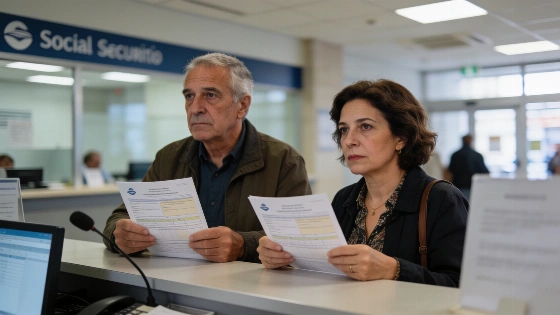
From 2027, Spaniards born in 1962 face new retirement thresholds as the 2011 reform takes full effect. The rules will impact eligibility, pension amounts, and the timing of retirement, with notable differences by gender and occupation.
Spaniards born in 1962 are approaching a pivotal moment: in 2027, they will be the first cohort fully subject to the final stage of Spain’s 2011 pension reform. For this group, the Social Security system will enforce stricter requirements to retire at 65, marking a significant shift in the country’s retirement landscape.
Under the new framework, those who have contributed at least 38 years and 6 months to Social Security can retire at 65. Anyone falling short of this threshold will see their ordinary retirement age rise to 67. This adjustment closes the gradual transition period that has been in place since the reform, tightening the rules for millions nearing retirement.
What Changes in 2027
Until the end of 2026, workers could retire at 65 with 38 years and 3 months of contributions, or at 66 years and 10 months with less. From January 2027, the bar rises: 38 years and 6 months for retirement at 65, and 67 for everyone else. The calculation is precise—partial years do not count, so those just shy of the requirement must check their individual records carefully.
Importantly, the 38 years and 6 months is not the minimum to receive a contributory pension. The general minimum remains 15 years, with at least two years contributed in the 15 years before retirement. However, reaching the 65-year threshold does not guarantee a full pension: 100% of the regulatory base is only achieved with 37 years of contributions under the 2027 scale. These are separate conditions that affect different parts of the calculation.
Unequal Impact by Gender and Occupation
Research from Fedea, in collaboration with Universitat Pompeu Fabra and the Barcelona School of Economics, highlights the uneven effects of raising the retirement age. Analyzing nearly 180,000 retirees, the study found that those affected by the higher legal age delayed their actual retirement by an average of 8.1 months. Women, who made up 62% of the affected group, postponed retirement by 10 months on average, compared to just 3.1 months for men.
Health outcomes also diverged. Fedea estimates a 1.6 percentage point increase in premature mortality between ages 60 and 67 among men impacted by the reform—roughly double the effect seen in women. The study links this to extended work in physically demanding sectors like construction, industry, and mining. While the 1962 generation was not included in the observed cohorts, Fedea identifies them as the first to face the full force of the new rules, suggesting the impact could be even greater for this group.
Early Retirement Options and Penalties
Despite the higher ordinary age, early retirement remains possible under certain conditions. Voluntary early retirement allows workers to retire up to two years before their ordinary age, provided they have at least 35 years of effective contributions and their pension exceeds the minimum for their age group. Involuntary early retirement, triggered by causes beyond the worker’s control, can be taken up to four years early, requiring at least 33 years of contributions and six months registered as a jobseeker, with the contract termination fitting specific legal criteria.
Both routes come with financial penalties: monthly reduction coefficients are applied to the pension for each month of early retirement, with the percentage depending on the length of the contribution career. Special rules exist for hazardous jobs, people with disabilities, partial retirement, and those covered by pre-2013 regulations.
How Pensions Will Be Calculated
Between 2026 and 2040, Spain’s Social Security will use two parallel formulas to determine the most favorable pension calculation. For those retiring in 2027, one method averages the 300 most recent contribution bases over 350 months, while the new system uses the 304 highest bases from the previous 308 months, divided by 354.67. The formulas will gradually shift until 2037, when the new model is fully implemented.
The final pension amount depends on the regulatory base, the percentage linked to years contributed, any early retirement penalties, and legal limits. Meeting the 38 years and 6 months threshold grants access to retirement at 65, but does not guarantee a maximum pension.
Regional Data and Limitations
According to the latest figures from the Andalusian Institute of Statistics and Cartography, as of July 2026, there were 1,734,612 pensions in Andalusia, with an average monthly benefit of €1,236—below the national average of €1,372. The average retirement pension in Spain stood at €1,573.7. However, these statistics do not reveal how many 1962-born workers will meet the new contribution requirements, nor do they allow for regional projections by year of birth and career length.
As Spain completes its transition to the new retirement system, the 1962 generation will be the first to experience its full impact. For those approaching retirement, careful review of individual contribution records and early planning will be essential to navigate the new rules and secure the best possible outcome.