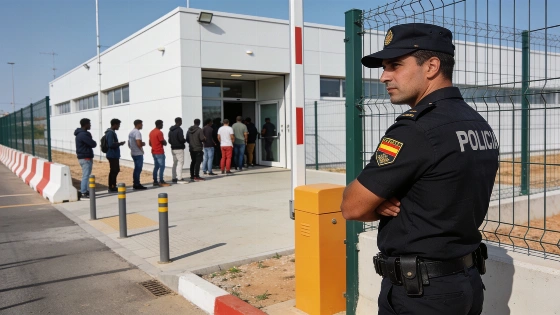
Spain plans to open two permanent migrant identification centers in Ceuta and Melilla, each with 800 beds. The goal is to process arrivals more quickly and reduce overcrowding in public spaces.
Spain is changing how it manages its borders by building two permanent migrant identification centers in Ceuta and Melilla. Each center will have space for 800 people. The move comes after a surge in arrivals left thousands sleeping outside and stretched local resources thin. Authorities hope these new facilities will replace the temporary shelters used in recent emergencies.
The government wants to speed up identification and expulsion procedures, and to reduce the number of migrants living on city streets. The new centers, called CATES (Centros de Atención Temporal de Extranjeros), will act as main processing hubs. Migrants are expected to stay only a few days while officials decide whether they can remain in Spain or must leave. The aim is to return those without international protection rights quickly, especially to Morocco.
According to European Parliament research services, after the mass crossing into Ceuta, Spanish law allows for a maximum of 72 hours of temporary detention for identity checks and to initiate deportation procedures.
Prime Minister Pedro Sánchez has set a target of 10,000 beds in Ceuta, combining both temporary and permanent facilities. The 800-bed centers in Ceuta and Melilla are key parts of this plan. They are among 14 projects from the Ministry of the Interior, with a total budget of €35.6 million, most of which is expected to come from European funds. Construction timelines are still unclear, but officials say the work needs to move quickly.
Interior Minister Fernando Grande-Marlaska is scheduled to meet with European Commissioner Magnus Brunner in Madrid to discuss funding and coordinate the response. The government is also expanding border infrastructure, including extending breakwaters in both cities, to strengthen physical barriers and manage arrivals more effectively.
This week, 4,160 migrants are staying in temporary beds, and that number could rise to 6,000 soon. Identification procedures have been completed for 1,822 people, allowing expulsion proceedings to begin. Official figures show 5,482 voluntary returns, 307 deportations due to violent incidents, and 100 people who have given up their requests for international protection. The government has made it clear: most arrivals in Ceuta will not qualify for protection and will be sent back.
The European Union has already allocated €114.7 million to Spain to address the Ceuta crisis, with €82.7 million from the AMIF fund and €32 million from the border management and visa instrument. These funds are earmarked for strengthening border security, expanding reception capacity—including for unaccompanied minors—and supporting returns.
Euronews
Unaccompanied minors remain a major concern. The central government has registered and is caring for 2,048 minors in Ceuta, with 1,612 arriving since July 30. Still, between 700 and 1,000 are unaccounted for and remain on the streets. After weeks of disagreement with Ceuta’s local president Juan Jesús Vivas, Madrid has started processing family reunification cases, beginning with 10 out of an estimated 3,000 minors. Those who cannot be reunited with family will stay in Spain.
The government will keep full control of the crisis response until at least December 31, with extra security forces in place. Officials say only fast, coordinated action between all levels of government can restore order. Political tensions continue, with government spokesperson Elma Saiz criticizing Vivas for putting party interests ahead of local needs.
Spain’s approach differs from the broader European debate, where temporary solutions are common. By investing in permanent infrastructure and seeking EU funding, Madrid is signaling it does not want border cities to become long-term holding zones. The policy is controversial, but it reflects a tougher stance: rapid identification, quick returns, and a clear message that irregular arrivals will not find easy refuge. As reported earlier, the government’s handling of social crises often shows the limits of coordination between national and local authorities. In Ceuta and Melilla, the stakes are high, and the outcome will shape Spain’s migration policy going forward.