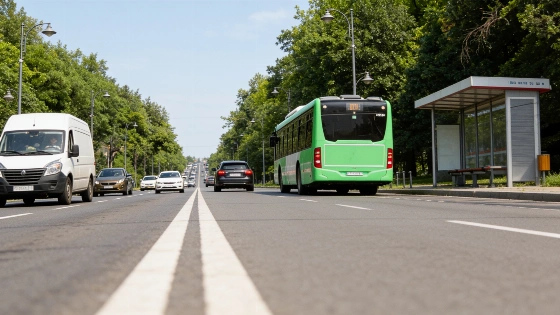
Spain’s DGT will introduce major traffic law reforms from October 2026, focusing on protecting pedestrians, cyclists, and motorcyclists. The new rules aim to reduce accidents at crossings and clarify road priorities.
From October 1, 2026, Spain’s Dirección General de Tráfico (DGT) will enforce a new set of traffic regulations designed to address persistent safety risks for pedestrians, cyclists, and motorcyclists. The changes, formalized under Real Decreto 518/2026, respond to a decade of troubling statistics: between 2014 and 2023, pedestrians accounted for 20% of all road fatalities in Spain, according to Línea Directa.
One of the most significant updates concerns traffic lights at pedestrian crossings. The DGT will eliminate the current overlap where vehicles face a flashing amber light while pedestrians see green. This combination, common near roundabouts and intersections, has led to confusion and contributed to accidents—30% of pedestrian collisions occur at crosswalks, with excessive speed and driver distraction as leading causes. Under the new rules, whenever pedestrians are permitted to cross, vehicles will face a red light, removing ambiguity and reinforcing pedestrian priority.
Pedestrians accounted for 20% of all road fatalities in Spain between 2014 and 2023.
The reforms extend beyond traffic signals. The DGT will grant legal status to “safe school routes,” formally defining and protecting pathways designed for children traveling to and from school. This move aims to encourage safer, more independent mobility for young students.
For cyclists, the new regulations will require helmets at all times, regardless of the type of road. Motorcyclists will see stricter requirements: they may use the right shoulder during traffic jams only on marked stretches and must not exceed 30 km/h. Protective gloves will become mandatory on interurban roads, and closed footwear will be required everywhere, including city streets. Failure to comply will result in a €200 fine.
Users of personal mobility vehicles (VMP), such as electric scooters, will also face tighter controls. Riders must be at least 15 years old, wear a helmet at all times, and use a reflective vest at night or in low-visibility conditions. Non-compliance with helmet or vest rules will also incur a €200 penalty.
These measures reflect a broader push to modernize Spain’s road safety framework. As noted by elespanol motor, the DGT’s approach is shaped by accident data and the need to clarify priorities at critical points like crosswalks. The focus on vulnerable users echoes concerns raised in other areas of Spanish mobility policy, such as the ongoing challenges with vehicle inspections and lighting standards, highlighted in reports like recent analyses of Spain’s ITV inspection outcomes.
While the new rules will not take effect until autumn 2026, their announcement signals a shift toward stricter, more protective road policies. The DGT’s reforms are expected to influence not only daily commutes but also the broader culture of road safety in Spain, with particular attention to those most at risk.