Spain is considering newborn screening for familial hypercholesterolaemia. A low-cost test could identify affected children and prompt checks for relatives before heart disease appears.
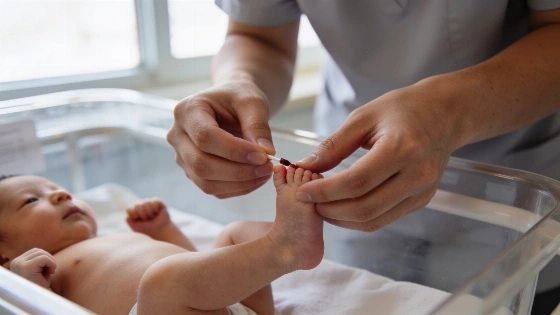
A three-euro cholesterol test could help find children who inherit familial hypercholesterolaemia before cardiovascular damage begins. The Fundación Hipercolesterolemia Familiar wants Spain to add the disease to newborn screening. The proposal would also let doctors test parents, siblings, grandparents and other relatives who may not know they carry it.
This is not a nationwide programme yet. Andalusia is developing a pilot project to test whether familial hypercholesterolaemia can be added to neonatal screening. For now, the proposal is about early detection, not an approved national change.
For children with suspected familial hypercholesterolaemia, the latest Spanish recommendations also highlight measuring lipoprotein(a) from around the age of five as an additional diagnostic step.
Familial hypercholesterolaemia is the most common genetic disease, according to the Sociedad Española de Endocrinología y Nutrición (SEEN). It affects one in every 250 people. Spain is estimated to have around 200,000 patients, including about 30,000 children. Only roughly 50,000 people have been diagnosed. The Fundación Hipercolesterolemia Familiar says most affected people are still unidentified.
The disease raises LDL cholesterol from birth. It also increases the risk of cardiovascular illness at a young age. The most severe form is homozygous familial hypercholesterolaemia. Without diagnosis and treatment before the age of two, it can cause myocardial infarction or severe aortic stenosis before the age of ten.
The goal is not simply to create a larger patient register. It is to reduce the years children spend with high LDL cholesterol and no treatment. A recent consensus highlighted by the Sociedad Española de Arteriosclerosis says that finding familial hypercholesterolaemia in childhood and starting therapy as early as possible can slow the progression of atherosclerosis. Treatment before puberty may help bring life expectancy closer to that of the general population.
The Spanish Society of Arteriosclerosis has placed early childhood detection at the centre of its latest recommendations. The guidance also gives a practical role to lipoprotein(a) testing in children with suspected familial hypercholesterolaemia, expanding assessment beyond the standard lipid profile.
Once a child is identified, the proposed cascade screening model can move through the family. It may find adults and other children who have no symptoms but share the inherited condition. Ana González of the Grupo Lípidos y Riesgo Cardiovascular of the SEEN has argued that regular screening of children should be paired with testing first-degree relatives of an identified child. Other health conditions show a similar gap between cases and diagnoses, as described in this related health report. Familial hypercholesterolaemia has its own danger because the cardiovascular risk begins in childhood.
Evidence from the SafeHeart study supports starting treatment earlier. Follow-up lasting more than 12 years found a marked reduction in cardiovascular risk among young patients treated from an early age. The findings, published in European Heart Journal, show that treated patients can reach a lifetime cardiovascular risk similar to that of the general population in both men and women.
SafeHeart also gives Spain a broad base of clinical experience. The registry covers 32 hospitals in the Sistema Nacional de Salud. It contains data on more than 5,600 people from over 1,000 families with familial hypercholesterolaemia. Health administrations could use that information to design screening and treatment procedures based on evidence already collected in Spain.
The economic case is direct. A study by the foundation requested by the Ministerio de Sanidad estimates that one myocardial infarction can be avoided over the following ten years for every six adults with familial hypercholesterolaemia who receive appropriate treatment. On that basis, early detection could prevent around 30,000 coronary events in Spain during the next decade. The proposed first-line cholesterol test is estimated to cost about three euros per newborn. The Fundación Hipercolesterolemia Familiar has repeatedly cited that figure in support of wider screening.
Pedro Mata, president and founder of the Fundación Hipercolesterolemia Familiar, says political will will decide whether screening becomes a health priority. Ana González of the Grupo Lípidos y Riesgo Cardiovascular of the SEEN says the main challenge is making sure no affected child goes unnoticed for years. José López Miranda of the Hospital Universitario Reina Sofía de Córdoba points to the low cost of measuring cholesterol in a newborn.
The case for testing is clear. A simple determination costing about three euros could identify a child, lead to family screening and bring treatment forward by years. Andalusia is developing a pilot, and Spanish data already cover thousands of patients. The proposal has moved beyond a general appeal. Its value can now be tested as a practical public-health measure that may prevent years of exposure to inherited cholesterol risk before the first cardiovascular event.