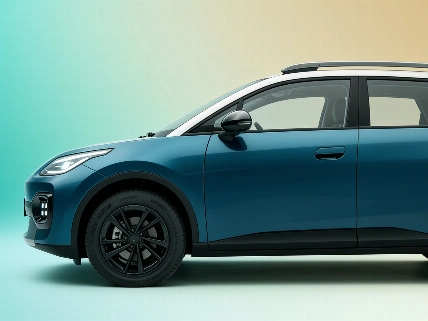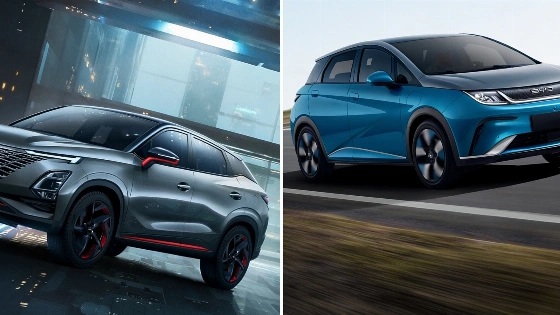
Chinese brands like Omoda and BYD are grabbing a big share of Spain’s car market, while local jobs and factories fall behind. The push for tariffs is heating up as Europe faces growing dependence on Chinese technology.
Chinese electric cars are no longer a distant worry for Spain. They are already changing the country’s car market. Brands like Omoda and BYD have moved in quickly. They use open borders to sell hard, but they do little to build factories or hire workers in Spain. Industry reports show that from January to August 2026, Chinese brands registered almost 120,000 passenger cars in Spain. That’s about 14.5% of the market—a sharp jump in a short time.
For Spanish buyers, this means more options and often lower prices. But for Spain’s auto industry, the impact runs deeper. Chinese companies treat Spain as just another place to sell cars. They invest little in local jobs or production. Many in the industry now feel Spain is just a number in China’s global plan. In the fully electric (BEV) segment, Chinese brands are even stronger. By August 2026, they made up 33.6% of BEV sales that month and 26.6% for the year. BYD, Leapmotor, and Deepal are among the top names, according to sector analysts.
In early September 2026, six out of the ten best-selling electric vehicles in Spain were Chinese models, highlighting their dominance in the EV rankings.
Spain’s political leaders have not come together on this issue. Pedro Sánchez has spoken out against tariffs from Donald Trump, but says little about similar moves by his ally Xi Jinping. This double standard leaves Spain open. The government seems more willing to accept Chinese control in electric vehicles than American competition. Analysis from Reuters and Bruegel shows that the fast rise of Chinese EV brands in Europe is pushing the EU to talk about tougher localization rules and what counts as "made in Europe" for cars.
China does not play passively in trade. When Spain exports pork, Beijing uses its huge market as a bargaining chip. China warns that if Spain pushes back, it could lose access to 1.4 billion buyers. The message is blunt: follow China’s rules or lose out. This is not just a Spanish problem. Across the EU, the flood of Chinese cars is now a main reason for new debates on industrial policy, as recent reports from top European economic think tanks show.
More people are now calling for tariffs on Chinese electric cars. The case is clear—tariffs are not always bad, and in this case, they might be needed to keep Spain and Europe from falling further behind in electric vehicles. The risk is not only about money. It’s also about control. Letting Chinese imports grow unchecked could mean Europe ends up relying on technology from an authoritarian regime, instead of competing with a democracy like the United States.
After an EU investigation in 2024, additional duties on battery electric vehicles (BEV) from China were introduced, with varying rates for brands like BYD, Geely, and SAIC. Importantly, these tariffs primarily target BEVs, not plug-in hybrids (PHEV), which has led to a faster increase in Chinese PHEV imports.
Europe is already behind in battery-powered car technology. Chinese brands are growing fast, while local makers struggle to keep up. The pressure is rising, as shown in an earlier breakdown of how global tariff fights threaten Spanish car factories and jobs.
Spain now faces a clear choice. It can keep letting Chinese electric cars take over, with little benefit for local workers or industry. Or it can act to defend its own factories and future in technology. The facts point to a need for stronger trade barriers. Without them, Spain risks becoming just another outpost in China’s electric car empire, with fewer jobs and less control over its own future.