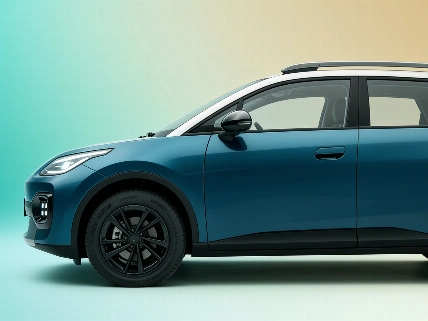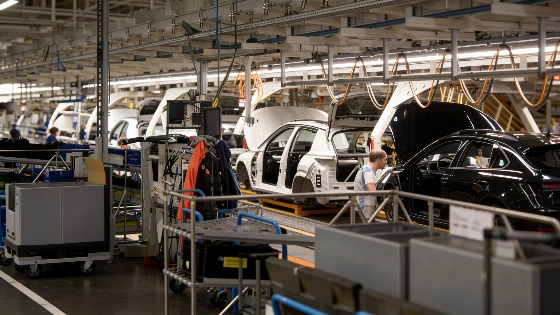
Spanish car plants are adding jobs and building more electrified cars, even though overall production is down from last year. New figures show electric and hybrid vehicles now make up a record share of what’s coming off the line.
Spanish car factories are going against the trend. Total vehicle output is still lower than last year, but new electric and hybrid models are pushing both production and hiring up. Fresh numbers from Anfac, the Spanish car and truck makers’ group, show a sector in the middle of big changes. Electric and hybrid cars are no longer a side project—they’re now a major part of the work on the factory floor.
From January to August, Spanish plants built 1,452,791 vehicles. That’s a drop of 1.8% compared to the same stretch in 2025. But what’s being built is shifting fast. Pure electric and plug-in hybrid vehicles hit 154,797 units in those eight months, up 6.6% from last year. Their share of total output rose to 10.7%. In August, almost one in five cars made in Spain was electrified.
Production of fully electric vehicles (BEV) in Spain jumped 28.8% in the first eight months of the year, while plug-in hybrids declined by 13.5%.
July was a key month. Factories turned out 193,806 vehicles, up 3.3% from July last year. Electrified models jumped 46% to 30,067 units. That month, electrified cars made up 15.5% of all production. Even in August, when the usual summer break cut total output by 15.5%, electrified models soared 71.1% to 11,586 units. They grabbed a record 19.5% share of the month’s production.
The push isn’t just about electric and plug-in hybrids. Cars running on other fuels—like natural gas, LPG, and regular hybrids—reached 643,130 units by August, up 14.5%. These now make up 44.3% of all vehicles built in Spain. In July, output of these alternative-fuel cars rose 31.3%. In August, they held steady at 45% of the total.
But exports are still a problem. Spain sent 1,235,865 vehicles abroad in the first eight months, down 2.8% from last year. July brought a small break, with exports up 3.2% to 162,958 units. Over 90% went to Europe. Italy and the Netherlands bought more Spanish cars, but sales to Turkey, Belgium, and especially the UK dropped sharply. In August, exports fell again by 15.3%. The UK market crashed by 64.2%.
Industry reports from September highlight that employment at Spanish car plants is rising even as total output falls, reflecting a shift toward more technologically advanced models and a move away from volume-driven production.
Industry bosses aren’t hiding what’s at stake. José López-Tafall, Anfac’s director general, says the wave of electrified models is a good sign. But he warns that Spanish output is still well below the peaks of 2019 or even 2023. He says the government needs to keep backing both buyers and carmakers. The Plan Auto+ and purchase incentives, he argues, should not only stay but get stronger if Spain wants to lock in these gains.
This shift is part of a bigger trend. Spain’s auto sector is following moves by big names like Volkswagen, which recently chose Navarra for electric SUV production, as reported earlier. The stakes are high. With almost half of all cars now running on alternative fuels, Spanish factories are betting on electrification to drive growth—even as old export markets weaken.
The numbers are clear. Electrified and alternative-fuel cars are now the main story in Spanish auto manufacturing. If policymakers listen to Anfac and keep up support, Spain could become a European leader in the electric shift. For now, the industry is holding up, but its future will depend on whether this momentum can beat falling exports and global uncertainty.