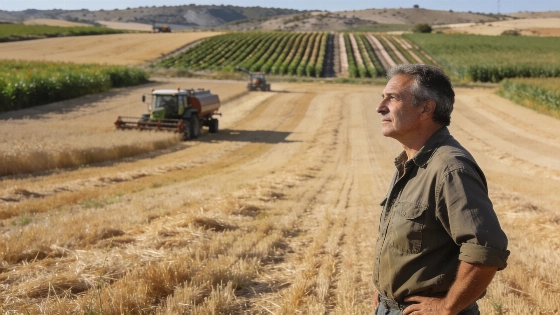
After three decades managing his family's 290-hectare farm in Bobadilla del Campo, Luis Velasco Alonso says rising costs and stagnant crop prices are pushing profitability to the brink. He urges less red tape, stronger support for Spanish produce, and collective action among farmers.
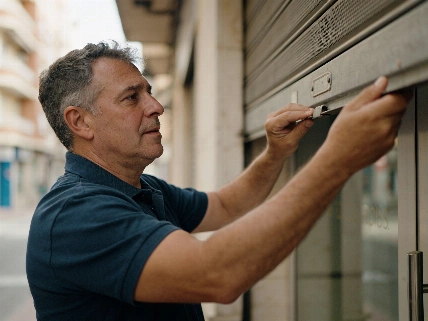
When Luis Velasco Alonso took over his family's farm in Bobadilla del Campo in 1993, he inherited not just land, but a way of life. Now, after 33 years and with 290 hectares under his care, Velasco says the risks of farming in Spain have never been higher—while the rewards keep shrinking.
Velasco, 58, manages the operation with his brother Pablo. Of the total land, 260 hectares are family-owned and 30 are leased, all within the small Valladolid municipality of just 279 residents. The farm is carefully diversified: 210 hectares are dedicated to cereals, legumes, and rapeseed, both dryland and irrigated; 60 hectares are used for intensive crops like sugar beet, potatoes, and sweetcorn; and nearly 20 hectares are planted with Verdejo vines under the Rueda Denomination of Origin. The family once raised Castellana sheep, but abandoned livestock due to persistently low lamb prices and poor returns—a decision echoed by other Spanish producers forced to sell below cost.
Profit Squeezed by Costs
Velasco describes this year's cereal harvest as average, with barley yields ranging from 2,000 to 4,500 kilos per hectare depending on soil and irrigation. But the real problem, he says, is not the yield—it's the price. Fertilizers, diesel, crop protection products, and machinery have all become more expensive, while the value of many crops remains flat. "We can't be the ones who risk the most and earn the least," Velasco says, pointing out that some crops now offer little or even negative profitability. Spanish law requires that farm-gate prices exceed production costs, but in practice, many campaigns still leave farmers with slim or no margins.
Red Tape and Market Power
For Velasco, the solution starts with cutting bureaucracy. He calls for fewer administrative hurdles and a review of restrictions on fertilizers and crop protection products. He also wants more promotion of Spanish-grown food and greater cooperation among farmers to market their products together, reducing duplicated investments in machinery and strengthening their bargaining position with buyers. Sharing services and information on new technologies, he argues, could help make farms more viable and competitive.
Velasco also advocates for recognizing agriculture as a strategic sector and establishing a strong, independent farmers' union funded by producers themselves. These are personal proposals, not official policy, but they reflect a growing frustration among Spain's agricultural community.
Future Uncertain, But Not Hopeless
Despite the challenges, Velasco does not foresee an immediate closure of his farm. He and his brother expect to continue for another eight years before retirement, and one of his sons—an industrial engineer—has shown interest in taking over. Still, the family's future in farming depends on restoring profitability. The struggle to attract young people to agriculture is well documented, and Velasco's situation is an exception rather than the rule.
He remains cautiously optimistic, insisting that Spain must protect its own food production and rural life. As he sees it, the survival of farms like his is not just a personal matter, but a question of national interest. According to EL ESPAÑOL de Castilla y León, Velasco's story is emblematic of the pressures facing Spanish farmers today: rising costs, stagnant prices, and a system that too often leaves those who work the land with the smallest share of its rewards.