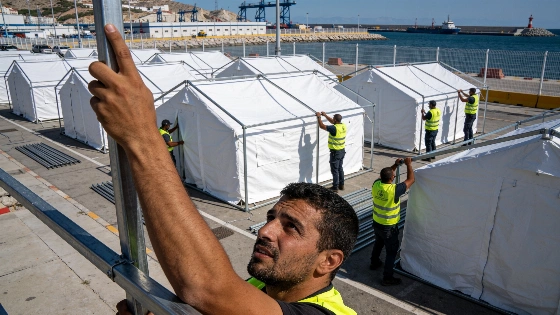
Madrid has overridden Ceuta’s local authorities to install a temporary camp for over 1,000 migrants at the city’s port. The move follows a last-minute rejection by the port’s board, escalating a political standoff over migration management.
The Spanish government has taken direct control of Ceuta’s port to push through the installation of a temporary camp for more than 1,000 migrants. This move came after the port’s board, led by appointees of Ceuta’s president Juan Jesús Vivas, voted down the plan despite earlier agreements.
For weeks, Madrid and Ceuta’s city government had discussed where to place new migrant facilities. The port’s unused land was the only site both sides had accepted after Vivas rejected other options, including the military hospital and sports centers. But when the time came for formal approval, the port’s board blocked the project, citing security risks and the site’s proximity to schools and fuel storage. Eleven members representing the city and port businesses outvoted the four central government representatives.
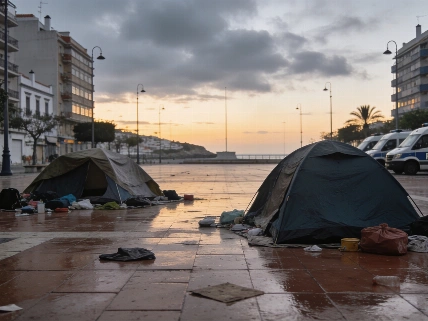
After the mass crossing from Morocco on July 30–31, about 5,000 people remained in Ceuta, including approximately 1,200–1,600 minors, according to official sources.
Transport Minister Óscar Puente responded by invoking article 73.3 of the ports law, issuing an order that overrides local objections and allows the Ministry of Inclusion to proceed. The government’s legal argument is that the tents are temporary, not permanent housing, and that national interests take priority. Madrid used a similar approach during the Hantavirus crisis in the Canary Islands, bypassing regional opposition to manage a public emergency.
Work on the camp had already started before port officials halted it. With the ministerial order now in place, construction resumes on 16,000 square meters in the port’s western extension. The government says it will implement all necessary security measures to address concerns about nearby infrastructure and schools, but the reversal by Vivas’s team has left Madrid frustrated.
Behind the legal steps is a growing political rift. The Sánchez government accuses Vivas of blocking crisis management for local political gain, noting that Madrid is covering the costs and logistics—up to 309 million euros for Ceuta—while Vivas’s public opposition boosts his popularity. The city’s refusal to authorize the transfer of unaccompanied minors to the mainland, despite severe overcrowding, has made relations worse. As reported earlier, this deadlock has left hundreds of vulnerable minors in limbo.
On August 30, the Spanish government announced an emergency aid package of €165 million to help Ceuta manage migration pressure and accelerate the accommodation and return of migrants. Authorities also confirmed plans to expand reception capacity in Ceuta to 6,000 places in the near term, with about 3,300 already available at the time.
The port board’s stated reasons for blocking the camp—risks to commercial areas, proximity to a primary school, and the presence of fuel reserves—were all known when the original agreement was reached. Government sources say these objections are now being used to delay action, even as thousands of migrants remain on Ceuta’s streets, complicating identification and repatriation. The government argues that only by moving people into controlled facilities can it begin the legal process of returning adults and, where possible, minors.
Madrid’s intervention carries risks. Public sentiment in Ceuta is hostile to new migrant facilities, and protests are possible. Still, the government argues that leaving migrants unsheltered and city services overwhelmed is not an option. Ironically, the port’s rejection letter triggered the legal clause that allowed the minister to take control, making further local obstruction impossible.
This episode shows the limits of consensus when local and national interests clash. The government’s decision to override Ceuta’s leadership marks a shift in Spain’s migration response, signaling that Madrid will no longer accept local vetoes that block urgent action. With the city’s leadership appealing to local fears while Madrid handles the fallout, the central government has decided that direct intervention is the only way forward, even if it deepens local resentment.