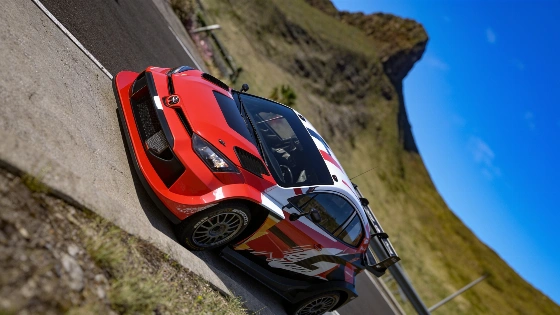
A Spanish-built rally car could soon return to the World Rally Championship after a quarter-century absence. The WRT Rally1 Spain project, led by RMC Motorsport and the national federation, is preparing to challenge global giants under new cost-cutting FIA regulations.
Spain has not seen a homegrown rally car in the World Rally Championship’s top class for more than twenty five years. That could change soon. The WRT Rally1 Spain project, revealed at the Rally Islas Canarias in April 2026, is RMC Motorsport’s push—backed by the Real Federación Española de Automovilismo—to bring Spanish engineering back to the world stage. The target: a full WRC return in 2027.
The official homologation date for the first WRC27 cars is set for November 1, 2026, with both Project Rally One and RMC Motorsport targeting this deadline.
RMC Motorsport did not land here by luck. Roberto Méndez started the workshop in 2004 in Caboalles de Abajo. Since then, the team has built and prepped race cars, including its own N5 models since 2017. The WRT Rally1 Spain project has the national federation’s technical backing and support from the Consejo Superior de Deportes. At the launch, federation president Manuel Aviñó pointed out that Spain is the first national body to back a program like this. FIA vice president Malcolm Wilson called the move “unprecedented in the championship.”
Engineering is in skilled hands. FDC, led by Javier Ciabattari—who has worked in Formula 1 and Hyundai WRC—heads up the car’s design. Julián Piedrafita is advising on electronics and suspension. The rules call for a 1.6-liter turbo engine that runs on sustainable fuel, all-wheel drive, double wishbone suspension, and a five-speed sequential gearbox. RMC has already built two chassis at its Villablino shop. Both have FIA approval. The final bodywork design is still under wraps.
Spain has not had a homegrown constructor in the WRC’s top class for over 25 years, making the WRT Rally1 Spain project a landmark return for Spanish engineering at the highest level of rallying.
The timeline is tight. Technical director Fernando Álvarez says the team wants the car running by October 2026. He will not promise a fixed date. The FIA has made it clear: real WRC entry depends on finishing the program and getting full homologation under the new rules. If RMC Motorsport pulls it off, the team could race at least half the 2027 season. Making the Monte Carlo opener is a tough ask.
SEAT Sport was the last Spanish constructor in the WRC’s top class. That ended after 2000. Now, a team from León’s mining region is taking on the big manufacturers. RMC Motorsport stands next to Toyota in the FIA’s plans. That says a lot about how much the sport has changed. The car still has to prove itself on the stages. But the project is real. The FIA has recognized it.
Spain’s car scene has seen big moments before. One example: the classic car rally in Burgos reported earlier. But this new project is about what comes next. WRT Rally1 Spain is a bet on new rules, local skill, and the belief that Spanish engineering can compete again at the top. If the team delivers, it will be more than a technical win. It will be a real comeback for Spain in world rallying. The drive is clear. The ambition is real.