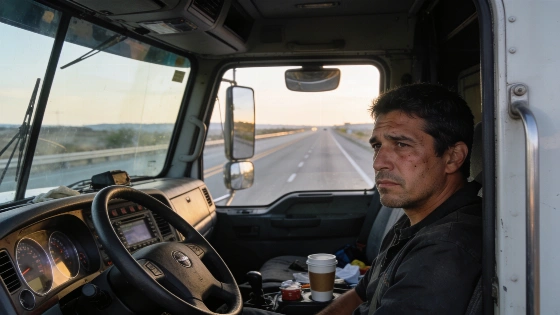
Jesús left Spain to drive trucks in the United States, drawn by the promise of better pay. He now works fourteen hours a day without a single day off, exposing the harsh trade-offs behind the numbers. His story highlights the true price of a bigger paycheck.
Jesús, a Spanish truck driver, left his home country for the United States, hoping that better pay would make the move worthwhile. Now he spends fourteen hours a day behind the wheel, seven days a week, with no days off. The higher salary comes at the cost of exhaustion and a life spent almost entirely on the road.
"I earn 180 euros per day," Jesús says, but the reality is more complicated. US trucking rules allow up to eleven hours of driving within a fourteen-hour work window, and drivers can work up to seventy hours over eight days. In Europe, the limits are stricter: nine hours a day, fifty-six hours a week, and mandatory rest periods that can't be skipped.
In 2023, the American Trucking Associations reported a shortage of over 80,000 truck drivers in the US, highlighting the intense demand and pressure on existing drivers.
The numbers are tempting, but the trade-off is clear. According to the US Bureau of Labor Statistics, the average truck driver in the States earns about 49,600 euros a year—almost double the 24,000 to 30,000 euros common in Spain. But the extra money means long hours and little rest. "I have no days off. I work from Monday to Sunday, fourteen hours every day," Jesús says. The job is physically tough and mentally draining. He admits, "I have my work very romanticized because I love it, but it wears you down psychologically."
Rest is hard to come by. In Spain, drivers must take eleven hours off each day and forty-five hours between work weeks. In the US, the minimum is ten hours daily and just thirty-four hours before starting a new week. This difference shapes daily life. Jesús misses the roadside stops in Spain, especially a simple "bocata de lomo con queso," and is tired of the fast food that fills most American truck stops.
Even with the sacrifices, Jesús believes the work matters. "Thanks to people like us, supermarkets have food, pharmacies have medicine, and homes have bricks," he says. The sense of purpose is real, but so is the toll. The American system rewards drivers who can keep going, not those who seek balance. As reported earlier, chasing higher pay often comes with hidden costs, whether in factories or on the road.
According to the Federal Motor Carrier Safety Administration, violations of hours-of-service rules are among the most common infractions found during roadside inspections in the US, with fatigue cited as a contributing factor in thousands of crashes annually. In 2022, the National Highway Traffic Safety Administration estimated that drowsy driving was responsible for at least 91,000 crashes, underscoring the safety risks associated with long shifts.
Data from elespanol motor shows the pay gap between Spain and the US is wide, but the cost is obvious: more money, less time for life. The US system puts productivity first, leaving drivers like Jesús to handle endless hours and little rest. For anyone thinking about making the same move, the lesson is simple—higher wages in US trucking come with real sacrifices. The dream of a better life on American highways is possible, but the price is paid every day behind the wheel.