A stone house with six bedrooms, a pool, and a 3,000 m² estate is on the market for 330,000 euros just 27 kilometers from Santiago de Compostela. The property includes an independent apartment, orchard, and traditional hórreo, but key details remain unclear for buyers.
Buyers looking for rural property near Santiago de Compostela may notice a new listing in Pontevedra: a stone house priced at 330,000 euros, offering six bedrooms, a pool, and a 3,000 m² estate. But the listing leaves out important details about the property’s legal status and what buyers are actually getting for the price.
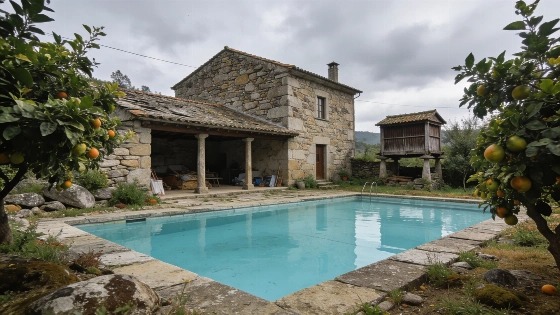
The main house splits its six bedrooms over two floors. Upstairs, there are five double bedrooms and one single. Four of the doubles have private bathrooms; the other two share a bath. Downstairs, the house has a kitchen, a combined living and dining area, a guest toilet, and what used to be a wine cellar. The covered porch includes a built-in barbecue. The listing does not say if the house is furnished or when it was built.
The property is listed through the Aldeas Abandonadas platform, confirming it is an official agency listing rather than a simple repost or summary.
Outside, the estate includes landscaped gardens, fruit trees, and a traditional hórreo. There is a large kiwi vine and a grapevine that is partly covered. The pool and a covered parking area for six cars are mentioned, but there is no information about the pool’s size, age, or maintenance—details that matter for rural buyers.
The property also has a 45 m² independent apartment with its own entrance, bedroom, bathroom, and open-plan kitchen. The listing does not clarify if this annex is officially registered as a separate dwelling or just an extra space, which could affect how it can be used or valued for a mortgage.
Heating comes from a diesel boiler with its own fuel tank, and the house uses a water chlorination system. The listing does not specify where the water comes from, how sewage is handled, or the property’s energy rating. There is no information about past utility costs or the tank’s capacity, so buyers have little idea of annual expenses.
The location is described as a selling point: 27 kilometers from Santiago de Compostela and 20 from Lalín, with a claimed 15-minute drive to Santiago by motorway. But the exact municipality is not named, so it’s impossible to check local services or confirm travel times. The listing also does not clarify whether the hórreo, pool, and parking are properly registered—an important issue in rural sales, where surprises are common. As reported earlier, even well-planned rural projects can run into unexpected legal or practical problems.
Before putting down a deposit, buyers should check the seller’s identity, any outstanding debts, and the total built area, as the Notariado recommends. Those needing a mortgage should review current lending terms and get an independent valuation. The listing does not break down taxes or transaction costs, and the original real estate ad is still available for anyone wanting more photos or details.
This property stands out for its size and rural setting, but the lack of clear legal and technical information is a concern. For 330,000 euros, buyers need more than attractive photos—they need solid facts and documentation. Until sellers in Spain’s rural market provide these up front, even the best-looking listings come with uncertainty.