A sharp retreat and rapid return of the sea surprised Santa Pola, Alicante. Police closed roads as water reached inland. The event, known as a meteotsunami, differs from earthquake-driven tsunamis.
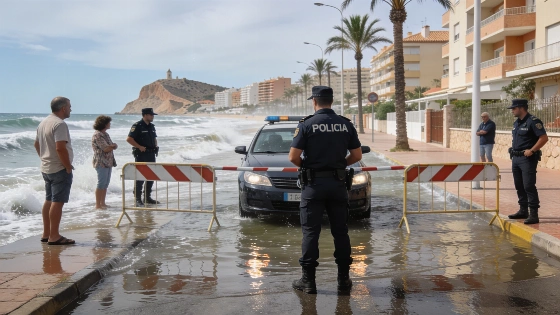
Santa Pola in Alicante faced an unusual maritime event on Monday when the sea abruptly receded from the shore, only to surge back minutes later, flooding parts of Playa Lisa up to Avenida Blasco Ibáñez. Local police responded by temporarily closing traffic in affected areas to prevent incidents as water advanced over typically dry ground. The phenomenon, while visually reminiscent of a tsunami, was not triggered by seismic activity but by a rare atmospheric process.
According to AEMET, the Spanish meteorological agency, this event is classified as a meteotsunami, or rissaga. Unlike traditional tsunamis caused by underwater earthquakes, meteotsunamis originate from rapid changes in atmospheric pressure. These pressure shifts generate waves that can cause the sea level to oscillate dramatically in a short period. When such atmospheric disturbances align with specific sea and coastal conditions, the resulting water movement can be both sudden and forceful.
In Santa Pola, the sequence began with the sea pulling back, exposing areas usually covered by water, before returning with enough force to reach inland streets. The incident was not isolated to Santa Pola; similar effects were observed along other parts of the Alicante coastline and elsewhere in the Valencian Community. While the spectacle drew comparisons to more destructive tsunamis, the underlying cause and risk profile are distinct.
Meteotsunamis can pose real dangers, especially for swimmers, boaters, and anyone near the shore or port facilities. The rapid shifts in water level and strong currents can catch people off guard. In this case, authorities reported no significant material damage, but precautionary measures were necessary to ensure public safety. Notably, such events are not new to the region—Santa Pola and other Mediterranean locations have documented similar occurrences in the past.
Episodes like this highlight the unpredictable nature of weather-driven sea phenomena in Spain. As seen during other recent extreme weather events, such as the heavy storms that affected the northeast and Balearic Islands earlier this year, sudden atmospheric changes can have immediate and visible impacts on coastal communities. For more on how severe weather has disrupted Spanish regions, see this report on recent storms and temperature drops across Spain.
Understanding meteotsunamis is crucial for local authorities and residents, especially in areas with a history of such incidents. While these events are less destructive than seismic tsunamis, their unpredictability and potential for rapid flooding require vigilance. The Santa Pola episode serves as a reminder of the complex interplay between atmospheric conditions and coastal safety in the Mediterranean.