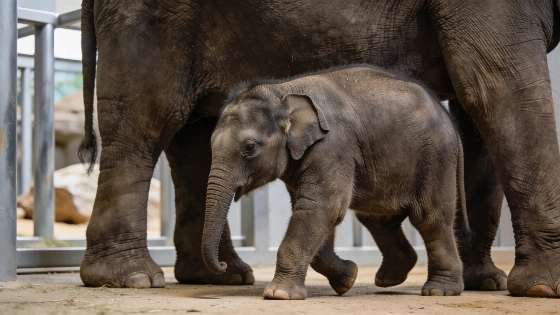
A Sumatran elephant calf was born at Zoo Aquarium de Madrid. The birth strengthens European conservation of a critically endangered subspecies. The newborn and mother are under close veterinary observation.
A Sumatran elephant calf was born this week at Zoo Aquarium de Madrid, marking a significant moment for the conservation of one of the world’s most threatened elephant subspecies. The male calf, weighing between 80 and 90 kilograms, arrived after a brief 20-minute labor and is reported to be in good health. This birth is seen as a vital step for the European breeding program focused on the survival of the Sumatran elephant, a population that has suffered dramatic habitat loss in recent decades.
The mother, Cynthia, gave birth following a gestation period of over 21 months—the longest known among land mammals. Within half an hour of delivery, the calf was already able to stand and walk alongside its mother. Zoo staff emphasize that Cynthia’s experience played a crucial role in the calf’s first hours, as she remained attentive and protective from the outset. The event also drew a strong response from the rest of the elephant group, with other females surrounding Cynthia during labor and staying close to the newborn, reflecting the matriarchal and cooperative nature of elephant societies.
Veterinary teams at the zoo had been closely monitoring Cynthia’s condition for weeks, using hormonal checks to anticipate the birth. According to the zoo’s veterinary staff, both the mother’s care and the group’s behavior have been exemplary, but specialists will continue to monitor the calf’s development in the coming weeks to ensure normal growth and adaptation.
Zoo Aquarium de Madrid is currently the only institution in Europe housing Sumatran Asian elephants as part of the European Endangered Species Programme (EEP), coordinated by the European Association of Zoos and Aquaria (EAZA). These programs aim to maintain genetically viable populations of threatened species and support their long-term survival. The arrival of this calf is particularly significant given the precarious status of the Sumatran elephant in the wild. According to the International Union for Conservation of Nature (IUCN), the subspecies has lost nearly 69% of its habitat over the past 30 years due to deforestation, agricultural expansion, and fragmentation of Indonesia’s tropical forests.
Globally, the Asian elephant population is estimated at around 52,000, but the Sumatran subspecies faces the highest risk, sharing threats with other large mammals on the island such as the orangutan, tiger, and Sumatran rhino—all severely impacted by habitat loss. For now, the newborn will remain under veterinary supervision with its mother, and the zoo will decide when to introduce the calf to public viewing based on its health and adaptation needs.
Sumatran elephants are classified as critically endangered, with their survival depending on both in-situ and ex-situ conservation efforts. The birth at Madrid Zoo not only supports the genetic diversity of the captive population but also raises awareness of the urgent need to protect remaining wild habitats. Conservationists stress that without coordinated international action, the future of the Sumatran elephant remains uncertain. The zoo’s participation in the EEP is part of a broader European commitment to safeguarding species on the brink of extinction, providing a controlled environment for breeding and research while highlighting the ongoing challenges faced by wildlife in their natural environments.