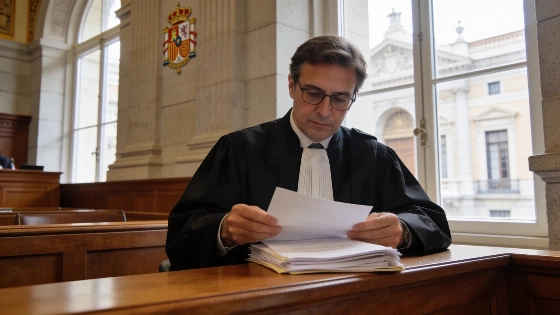
The Supreme Court has rejected the PP’s urgent attempt to summon ministers over the Ceuta crisis. Judges ruled there was no proven legal urgency to bypass government input. The decision delays Senate hearings until further review.
The Supreme Court has dismissed the Partido Popular’s urgent request to force government ministers to appear in the Senate this August regarding the ongoing crisis in Ceuta. The court’s decision, issued by the Vacation Chamber, found that the PP failed to demonstrate the level of legal urgency required to justify such an exceptional measure without first hearing the government’s position.
The PP, led by Alberto Núñez Feijóo, had sought a fast-track ruling that would compel several ministers to testify before the Senate during the extraordinary August session. Their legal strategy aimed to secure immediate hearings before the court could rule on the broader question of whether the executive branch has the right to determine the timing of its appearances before parliament. The party specifically requested a ‘cautelarísima’ measure, which would have allowed the court to act without waiting for the State Attorney’s response on behalf of the government.
However, the Supreme Court made clear in its Saturday resolution that the PP’s arguments did not meet the threshold for such an urgent intervention. The judges noted that the need for parliamentary oversight did not necessarily require hearings to take place within the remaining week of the August session. The court emphasized that the government’s right to present its case could not be set aside without compelling justification.
The ruling also included a commitment from the court to issue a decision on the main dispute—whether the government can choose when to appear in the Senate—once it has received and reviewed the State Attorney’s submissions. The court assured that this process would not be subject to undue delay, signaling that a resolution could follow soon after the government’s formal response.
This case highlights ongoing tensions between the executive and opposition over parliamentary control and the management of sensitive issues such as the Ceuta crisis. The legal debate centers on the balance between urgent oversight and procedural fairness, with the Supreme Court acting as the final arbiter. According to public records, extraordinary Senate sessions in August are rare, and the use of ‘cautelarísima’ measures is typically reserved for situations where immediate action is essential to prevent irreparable harm. The court’s decision underscores the importance of procedural safeguards, even in politically charged contexts.