A sudden hailstorm in Tarragona left dozens injured and caused major disruptions. Local mayors say they were not warned in time. Civil Protection defends its alert policy, citing forecast thresholds.
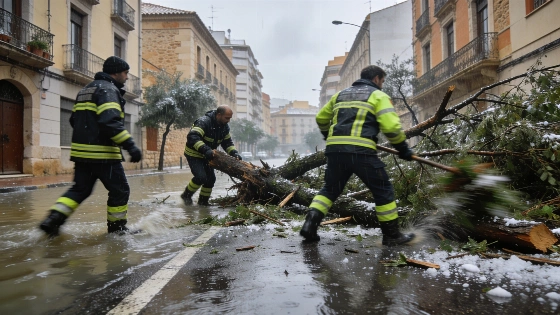
Mayors across Tarragona province have voiced strong criticism after a violent hailstorm struck the region, leaving around thirty people with minor injuries and forcing emergency services to respond to nearly 500 incidents. The storm, which hit on Monday, uprooted trees, flooded homes and parking lots, cut off roads, and suspended train services. Many residents were caught off guard, with some trapped in vehicles as the hail intensified.
Local leaders, including Tarragona's mayor Rubén Viñuales and El Vendrell's Kenneth Martínez, argue that the lack of timely alerts from authorities left their municipalities unprepared for the scale of the disaster. Viñuales stated that the official warning from the Catalonia Emergency Center (CECAT) arrived only after the storm had already begun, and initial forecasts had placed Tarragona outside the main risk zone. He emphasized that, while pre-alerts are often issued for less severe events, he would have preferred an early warning in this case, given the widespread flooding, downed trees, and power outages in areas like Monnars.
El Vendrell's mayor echoed these concerns, noting that his town had already experienced a severe storm just two days earlier. He reported that alerts were only received as the rain started, which complicated the response. The latest episode resulted in 11 injuries and left a minor in critical condition. Authorities were forced to evacuate a campsite and remove 200 young people from a nightclub as a precaution.
Civil Protection officials defended their decision not to send mass alerts, explaining that the forecast did not indicate a high enough risk to justify activating the Es-Alert system. According to the agency, alerts are typically reserved for situations where the danger level reaches 5 or 6 out of 6. In this case, the storm's predicted intensity was rated at level 4, which did not meet the threshold. The director of Meteocat clarified that issuing public alerts is not within their remit, but rather the responsibility of Civil Protection. Meteocat did issue a violent weather warning for Tarragona at 17:35, shortly before the storm hit, but the agency's deputy director admitted that the severity of the storms exceeded initial expectations in some areas.
The debate over the use of Es-Alert has grown as the system becomes more common for both imminent and preventive warnings. While some see it as a vital tool for public safety, others question whether the criteria for its use are too restrictive or inconsistently applied. The controversy is not new: previous severe weather events in Tarragona, such as those detailed in reports of earlier torrential rains and evacuations, have also raised questions about the effectiveness of alert protocols.
Spain's Civil Protection system relies on a combination of meteorological forecasts and risk assessments to determine when to issue public warnings. The Es-Alert system, introduced in recent years, sends emergency notifications directly to mobile phones in affected areas. Its use is intended for situations posing an imminent threat to life, but the criteria for activation remain a subject of ongoing debate among local officials and emergency planners. As extreme weather events become more frequent, the balance between avoiding unnecessary panic and ensuring timely warnings is likely to remain a contentious issue for authorities and residents alike.