The Teatro Real opened its 2026/2027 season on 23 September 2026 with King Felipe VI in attendance. Manon Lescaut shared the spotlight with the evening's carefully chosen looks from Madrid's social scene.
The Teatro Real opened its 2026/2027 season on 23 September 2026 with King Felipe VI at the centre of a high-profile Madrid gathering. Leading figures from aristocratic and social circles joined the first opera of the new programme. The theatre also became an immediate showcase for formal dressing. According to Casa Real, the monarch officially led the inauguration.
The guest list made the evening's social status clear.
Manon Lescaut returned to the Teatro Real after an absence of 102 years. The production was scheduled for 13 performances between 23 September and 11 October 2026.
Tamara Falcó, Carmen Lomana and Ana Botella attended the inauguration. Sofía Palazuelo and Fernando Fitz-James Stuart represented the aristocracy. Manuel Falcó and Amparo Corsini were also there. Their presence put the opening firmly on Madrid's social calendar without drawing attention away from the performance.
Opera remained the formal focus of the night.
The programme opened with "Manon Lescaut", Giacomo Puccini's opera. Casa Real's official announcement described it as a co-production with Cologne Opera. Nicola Luisotti was the musical director, and Carlos Wagner handled the staging. After the performance, guests moved to a cocktail reception. The evening therefore had two clear settings: the auditorium for the music and the reception for conversation and public appearances.
The 2026/2027 programme was described in several reports as comprising 16 titles and six new co-productions. That wider framework placed the Puccini revival within a substantial season rather than treating it as an isolated gala event.
The clothes soon became a story of their own.
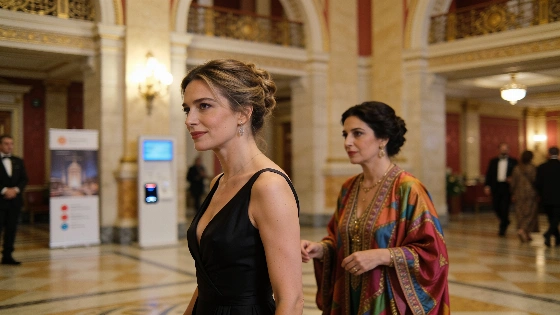
Formal invitations are now back on Madrid's calendar, and the Teatro Real opening showed several ways to dress for them. Tamara Falcó wore a classic dress from TFP by Tamara Falcó for Pedro del Hierro. It was one of the night's most closely watched looks. Ana Botella chose a colourful printed caftan from Philippa 1970. Her choice showed that the event allowed for a more relaxed and expressive idea of elegance.
The result was an evening style shaped by different ages and different ways of dressing for a major cultural event.
The Madrid setting also differed sharply from the legal focus of an earlier court report. This event centred on opera, ceremony and public appearances. Interest came from the meeting of the monarchy, established society, aristocratic names and carefully chosen clothes inside one of the capital's best-known cultural venues. El Español and other Spanish outlets also reported that Felipe VI attended without Queen Letizia. She was in Brussels that day for an event connected with cancer research.
That mix gave the evening its appeal. "Manon Lescaut" provided the artistic occasion. Its return after more than a century gave the premiere added historical weight. The king's presence gave the opening official importance. The guest list linked the theatre with Madrid's traditional social elite. The cocktail reception carried the event beyond the performance. The clothes also made the night useful to readers looking for ideas for formal invitations. The Teatro Real opening was more than a premiere. It showed how culture and social presentation still meet in Madrid.
Opera Actual described the revival as the Teatro Real's return to a work absent from its stage for 102 years. That helps explain why the production drew attention beyond the society pages. The long gap, the royal inauguration and the carefully arranged social setting all helped make the evening unusually visible.