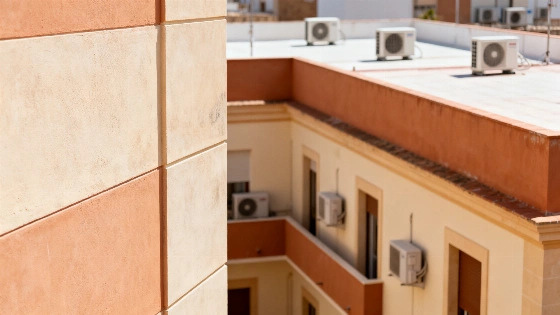
Valencia introduces fines of up to 3,000 euros for air conditioners on facades. In Valencia, installing an air conditioner on the building facade can now become an expensive mistake. City authorities require all equipment to be placed only on rooftops or in inner courtyards; otherwise, owners risk removal and fines. The new regulations are already in effect.
In Valencia, apartment owners are facing new restrictions: now, installing an air conditioner on the building's facade without approval can result not only in an immediate removal order but also a fine of up to €3,000. This decision was made by city authorities to preserve the appearance of buildings and prevent conflicts between neighbors.
Under the new rules, outdoor AC units may only be placed on the roof or in internal courtyards, provided this does not affect the building's aesthetics or interfere with communal elements. Any attempt to install equipment on the facade without official permission is considered a violation and may result in penalties.
The basis for these measures is the Ley de Propiedad Horizontal — a law regulating relations between owners in apartment buildings. It explicitly prohibits any changes that could affect the exterior, safety, or structure of the building without the consent of the community of residents. Even if installation is technically possible, without approval from the homeowners' meeting it is considered illegal.
Exceptions are allowed in certain cases: if the equipment is placed so that it is not visible from the street, does not affect the integrity of the facade, and does not compromise shared utilities. However, even in such situations, agreement with neighbors and compliance with the building's internal rules are required. Some buildings already have special provisions for installing air conditioners, helping to prevent disputes in advance.
The amount of the fine for violations depends on the municipality. In Madrid and Barcelona, penalties for the unauthorized installation of an air conditioner on the facade can also reach €3,000. Valencia now has a similar procedure: if the conflict cannot be resolved within the building, the case may go to court, where the owner will have to not only remove the equipment but also compensate for any possible damage.
In practice, attempts to circumvent these rules often do not end in favor of the apartment owner. As noted by russpain.com, even the desire to escape the heat does not exempt you from the requirement to coordinate installation with your neighbors—more details about the risks and nuances can be found in the article about the consequences of installing an air conditioner on the facade during summer in Spain.
Finally, if you are planning to install an air conditioner in a Spanish apartment, make sure to check the regulations for your building in advance and obtain written permission. This will help you avoid not only fines, but also lengthy disputes with neighbors and the property management company.