Rafael Bueno Latorre escaped 17 times from reformatories, hospitals and prisons. His final disappearance remains unexplained, and a new documentary revisits the case.
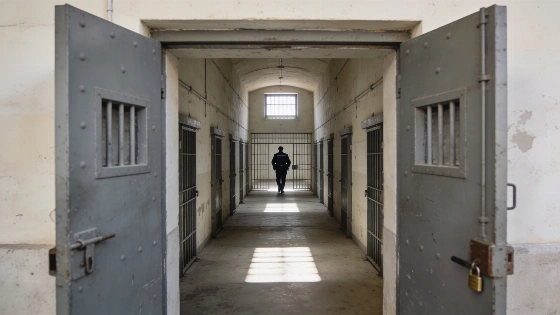
Three inmates disappeared from Alcalá-Meco on Good Friday in 1984. The prison was described as one of Europe's safest. They used no explosives or firearms. Reports say they relied on soap, planning and improvised soap pistols that fooled guards. Rafael Bueno Latorre was at the centre of the operation. His seventeenth escape has never been fully explained.
More than four decades later, that disappearance remains the hardest question in the story of a bank robber who repeatedly beat the institutions holding him. The documentary 17 fugas rebuilds his career through court records, press archives, testimonies and historical TVE footage digitised for the project. RTVE describes it as a reconstruction based on archival material and first-hand accounts, not a simple retelling of a legend.
The 1984 escape from Alcalá-Meco involved three inmates and was reportedly carried out without explosives or firearms, using improvised pistols made from soap.
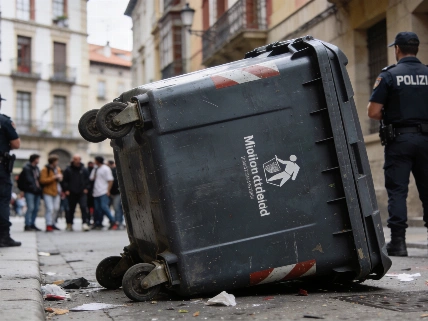
The film does not portray Bueno Latorre as a romantic outlaw. Its strongest material is the damage left behind. Police officers died. Families grieved. Prison staff had to work with limited resources. The security system changed after repeated failures.
His escape from Hospital Provincial de Burgos in 1983 changed the case. Associates killed two Policía Nacional officers to free him. A prison escape became a national case.
The documentary gives the widows and daughters of those officers space to describe decades of grief. They also discuss their efforts to secure institutional recognition for the victims. Published RTVE materials identify the officers as Jesús Postigo Pérez and Raúl Santamaría.
That episode exposed a practical weakness. Hospitals were not ready to guard inmates considered exceptionally dangerous, according to officials who speak in the film. The problem was no longer confined to prison walls. Custody outside the prison system had become part of the security problem.
The Burgos case showed that the security gap extended beyond prisons: hospitals were not prepared to guard exceptionally dangerous inmates. RTVE also reports that repeated failures eventually led to the creation of a specialised anti-robbery police unit because existing resources were insufficient.
Bueno Latorre's record started early. He escaped from reformatories, hospitals and prisons before he became linked to bank robberies and firearms. Former members of his group describe how he entered that world. Police and Guardia Civil officers explain why a specialised anti-robbery unit was created. Existing resources were not enough.
The period was marked by organised and violent bank robberies. Former officers recall daylight pursuits and shootings. Former inmates and bank robbers describe a man who punished people he believed had informed on him. A forensic psychiatrist who assessed him in prison adds a professional view of his personality and behaviour.
His story also crossed paths with the prison revolts of the Transition. Daniel Pont of COPEL remembers Bueno Latorre taking part in self-harm protests and the first major riot at Carabanchel. He did not identify with a political profile.
That detail places him inside a wider prison crisis. It does not turn him into a political figure.
17 fugas brings together former Policía Nacional and Guardia Civil officials, prisoners, bank robbers, COPEL members and relatives of the officers killed in Burgos. Their accounts do not create one simple portrait. The same man looked different to those who pursued him, those imprisoned with him and those who paid the personal price of his escapes.
The documentary also returns to the Spain that had the highest number of bank robberies in the world. In that setting, Bueno Latorre became an emblem of the bank-robber generation. His case tested the state's ability to contain increasingly organised crime.
More than 40 years after his last flight, the central mystery is still his fate. An independent account cited in coverage of the documentary says there is still no official confirmation that Bueno Latorre is alive.
17 fugas will be broadcast on Friday 2 October on la1 of TVE. It will also be available on RTVE play. The film does not revive the legend of the "Rey de las fugas". It pulls it apart. The record shows a system forced to adapt, while victims and families carried the consequences long after the headlines disappeared.