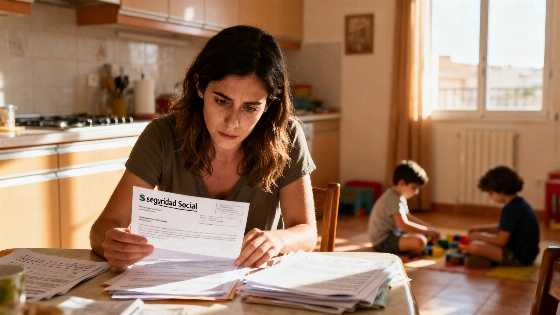
Thousands of Families in Spain Lose Up to €1,380 a Year Unaware of CAPI Assistance. Many families in Spain miss out on monthly child benefits via the CAPI program. This assistance is available even to those who do not receive the Ingreso Mínimo Vital, and the amounts can significantly support the family budget.
Spain has a little-known family support measure — the Complemento de Ayuda para la Infancia (CAPI), which allows families to receive up to €1,380 per year for each child under three. Importantly, the benefit is available even to those who do not receive the Ingreso Mínimo Vital (IMV), which comes as a surprise to many.
The essence of CAPI is a monthly payment for each minor in the family. The amount depends on the child’s age: €115 per month for children under 3 years old, €80.50 for children aged 3 to 6, and €57.50 for those aged 6 to 18. If a family has several children, the sum increases proportionally. For example, with two children aged two and five, the family can receive €195.50 per month.
Who is eligible for the payment
The key difference between CAPI and IMV is broader criteria regarding income and assets. Payments can be received by families who do not meet the strict IMV limits but satisfy a set of basic conditions: having minors in the household, legal residence in Spain for at least one year, a stable family structure, and compliance with administrative procedures.
Income limits for receiving CAPI are significantly higher than those for IMV. For example, a family with one adult and one child can have an income of up to €2,861.04 per month, while a family with two adults and two children — up to €4,181.52. This makes the assistance accessible to a much larger number of households.
How to apply for CAPI
Applications for CAPI are submitted through the same process as the Ingreso Mínimo Vital. To check preliminary eligibility, you can use the official IMV simulator. It is important to remember: even if IMV is not granted, CAPI may still be approved.
You can submit your documents online via the Seguridad Social electronic platform (with a certificate or Cl@ve), through a special form for those without an electronic signature, or in person at Seguridad Social service centers. There is a free support hotline available for consultations.
Compatibility with other payments
CAPI is compatible with most other types of social support: regional benefits, housing subsidies, education grants. The main requirement is not to exceed the established limits on income and assets. However, there are nuances: sometimes you have to choose between CAPI and, for example, a tax benefit for motherhood — which is more beneficial depends on the specific situation.
If there are changes in the family’s composition, income, or assets, this must be promptly reported to Seguridad Social to avoid subsequent recalculations and repayment of funds.
Context and details
The introduction of CAPI in 2022 became part of the fight against child poverty in Spain. According to Talent24h, many families are still unaware of their right to this benefit, although it can significantly impact the family budget. It is important to remember that state support for families with children is not limited to CAPI: there are other measures, including regional programs and tax deductions.
Questions regarding social rights and restrictions often become the subject of legal proceedings. For example, a recent court case in Vigo affirmed the right of residents to restrict the keeping of pets in their building, illustrating how important it is to carefully review the conditions for obtaining any social or housing support. You can find more details about this decision in the article on neighbors' rights to ban pets.
For families unsure of their eligibility for CAPI, experts advise not to delay checking the requirements and submitting an application: in practice, many households are rejected solely due to formal errors or lack of awareness of the details.