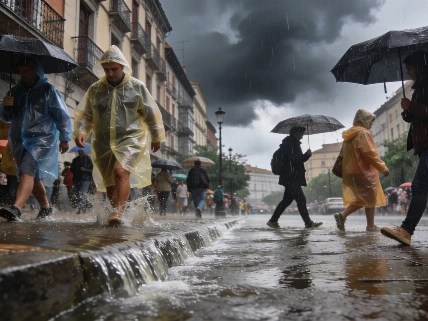
A third person has died in Catalonia after severe flooding. Two people remain missing as rescue teams deal with damaged rail links, power cuts and new weather warnings.
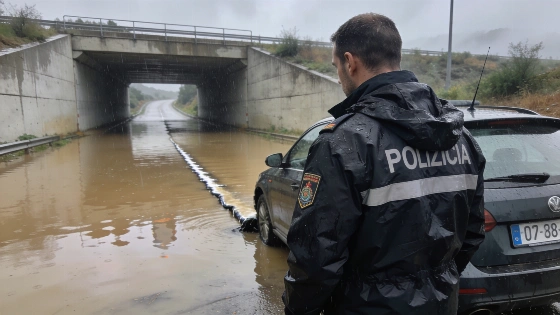
The latest body was found on Wednesday inside a flooded section of the Ronda Nord tunnel on the C-352 in Franqueses del Vallès, Barcelona province. The discovery brought the storm's confirmed death toll to three. Two people are still missing.
Emergency teams continue to search. Rain has also disrupted transport, electricity supplies and public services across Catalonia.
The victim was an unidentified man found near a vehicle, according to information obtained by RTVE and reported by EFE and Europa Press. The death does not initially appear to involve a criminal incident. Two other people died over the weekend in Tordera and Montornès del Vallès. By 4 October, authorities said the Tordera death followed the collapse of a campsite wall. The death in Montornès del Vallès was linked to a flooded car park.
К 4 октября служба экстренной помощи получила 237 обращений, а 51 человека доставили в больницы. Пожарные Каталонии выполнили 2 440 выездов и 226 операций по спасению людей, оказавшихся в ловушке из-за воды.
Two searches are still under way.
In Pineda de Mar, witnesses saw floodwater sweep a man away. A child is also missing in Granollers. Authorities do not initially believe that disappearance is connected to the rainfall. The weather has made the search harder. Rescue teams were already working through flooded areas around Pineda de Mar by 4 October.
The storm has also put Catalonia's transport network under strain. Rodalies began the day without service after drivers refused to operate trains. They considered parts of the infrastructure unsafe. Renfe and Adif later certified that the affected sections were safe. Services then began to return in stages.
Earlier transport coverage had already shown how closely Spain's infrastructure capacity is watched when major works and disruptions affect passenger movement. The coverage is available through earlier transport coverage.
Перебои затронули не только пригородные поезда: было нарушено высокоскоростное сообщение между Barcelona-Sants и Ла-Сагрерой, что повлияло на поездки между Барселоной и Жироной. В тоннеле на площади Каталонии Adif использовала три насоса для откачки скопившейся воды.
Emergency crews have carried out nearly 4,000 operations since the storm began. More than half took place in the northern metropolitan emergency region, which includes the two Vallès counties, Maresme and Barcelonès. The Bomberos de la Generalitat rescued 45 people in the latest hours. Most were trapped inside cars.
The Sistema de Emergencias Médicas, known as SEM, treated 24 people during that period and took two to hospital. Across the storm, SEM has attended 431 people. It transferred 79 of them to hospital for minor or less serious conditions.
The response was already large before the latest rail disruption. The pressure has not eased.
Rainfall was weaker than on previous days but still caused problems. All of Catalonia was under a yellow warning on Wednesday. Forecasts called for accumulations of 20 millimetres per hour, with hail possible in parts of Girona and Tarragona. Schools in Xerta and the Miami-Platja area of Tarragona could not open. Around 5,300 users remained without electricity. Telephone services were also affected.
Rail recovery was uneven. By 5 October, only some southern and regional routes were running normally. The R1, R2, R2 Nord, R3, R4, R7, R8, R11, R13 and R14 lines faced restrictions or replacement buses.
El País reported that the network was still unstable on 7 October. Reopening depended on inspections of damaged sections and test runs by empty trains. The drivers' union said some reopened sections lacked enough technical guarantees. Renfe and Adif said the required safety conditions had been met. They also said verification runs took place before passenger services resumed.
Catalan president Salvador Illa said the safety of people and infrastructure had to come first. Trains should return only after the relevant checks, he said.
The danger is moving rather than disappearing. Orange warnings have shifted to Asturias and Cantabria. Mountain areas there could receive between 60 and 80 litres in 12 hours. Yellow warnings also cover Aragón, the Balearic Islands, Castilla y León, Navarra and the Basque Country.
Thursday is expected to bring strong and persistent rain across the northern third of the peninsula, as well as Catalonia and the Balearic Islands. Thunderstorms and hail are possible.
Colder air will bring a marked temperature drop in northern and inland Spain. Forecasts put Burgos at 14 degrees and Ávila, León, Pamplona and Vitoria at 16 degrees. Madrid is expected to reach 19 degrees.
On Friday, uncertainty will focus on southern Spain, Ceuta and the Canary Islands. A dana could bring intense showers and storms. Catalonia's death toll, the rescue figures and the rail stoppage show how much work remains while warnings continue.
El País and transport operators reported that recovery is likely to be gradual. Repairs, flooding and further infrastructure inspections may keep some routes closed even after the weather improves.