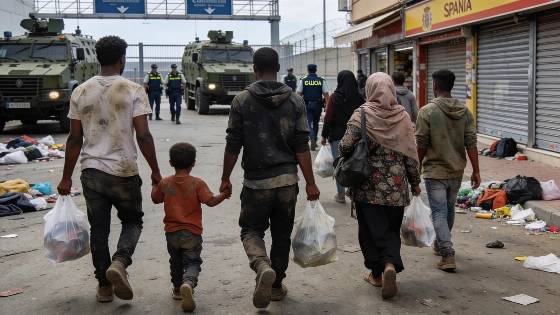
Ceuta saw a mass exodus as thousands of migrants returned to Morocco. Closed shops, food shortages and attacks forced many to leave. Authorities struggled to restore order amid rising tension at the border.
Ceuta faced a dramatic reversal on Friday as thousands of migrants who had entered the city just a day earlier began a steady retreat back to Morocco. The exodus, which authorities estimate reached up to 25,000 people by midday, was driven by a combination of closed businesses, lack of basic supplies, and violent hostility from some local residents. Many migrants, including families with children, spent the night outdoors—on hillsides, in parks, or on the streets—after being denied service at shops and restaurants. Reports of attacks with stones and even firearms circulated, with videos confirming chaotic scenes in several neighborhoods.
By morning, Ceuta was effectively locked down. Markets, boutiques, bars, and even gas stations remained shuttered, making it nearly impossible for newcomers to find food, water, or cigarettes. The Spanish army and Guardia Civil were deployed to manage the situation, while Moroccan authorities also intervened to discourage further crossings and facilitate returns. The border area saw a continuous flow of people heading back, many visibly exhausted, hungry, and carrying only a few belongings. Some described being forced to sleep in the hills after being chased away from urban areas by residents wielding stones and, in some cases, guns.
The scale of the movement echoed the events of 2021, when a similar surge saw around 10,000 people cross into Ceuta, only for many to leave within hours. This time, estimates suggest as many as 50,000 entered in a single day, but a significant portion quickly reversed course. According to police sources, at least 41 people have died attempting to cross the border, with the number of fatalities rising throughout the day. The humanitarian crisis was compounded by the lack of shelter, food, and basic necessities, as well as the threat of violence from both locals and other migrants.
In the city center, tensions remained high. Groups waving Spanish flags gathered ahead of Prime Minister Pedro Sánchez's visit, some shouting for his resignation. These gatherings sometimes spilled into confrontations, with demonstrators chasing young migrants through the streets. Business owners expressed frustration, torn between the risk of property damage and the inability to operate normally. One bar owner, speaking by phone, explained that he kept his doors closed to avoid being overwhelmed by sudden crowds, despite concerns about food spoilage.
As the day progressed, the border began to stabilize. Moroccan boats arrived to collect swimmers attempting to return, while authorities used tear gas and water cannons to clear hillsides. On the Spanish side, military vehicles and Guardia Civil patrols maintained order, and the border was cleared ahead of the prime minister's arrival. Early in the morning, the situation had appeared even more volatile, with black smoke rising from Findeq (Castillejos) and reports of vehicles set ablaze on the Moroccan side. The aftermath left Ceuta littered with abandoned clothing, plastic bottles, and makeshift flotation devices, transforming beaches and streets into temporary campsites and, eventually, into a scene of disorder and debris.
Friday's events in Ceuta highlight the ongoing challenges at Spain's borders, where sudden surges in migration can quickly overwhelm local infrastructure and spark social tensions. The closure of the city's historic Royal Wall, a major tourist landmark, underscored the scale of the disruption. For context, similar crises have affected other Spanish regions, such as the recent property fraud scandal in Marbella and Málaga, where authorities froze real estate transfers to protect residents—a situation detailed in this report on registry blocks and home loss. Both cases reflect the pressures facing border communities and the complex interplay between migration, security, and local stability.
Ceuta's unique position as a Spanish enclave on the African continent has long made it a focal point for migration from Morocco and sub-Saharan Africa. The city's population and infrastructure are not designed to absorb sudden influxes of tens of thousands of people. Spanish and Moroccan authorities have repeatedly coordinated to manage these episodes, but the humanitarian and political challenges persist. The events of this week serve as a stark reminder of the volatility at Europe's southern frontier and the urgent need for coordinated responses to migration and border security.