Three ministers will address Congress on their response to the Ceuta crisis. Their appearances follow mounting pressure and political tension. The government aims to clarify its actions after the recent migrant influx.
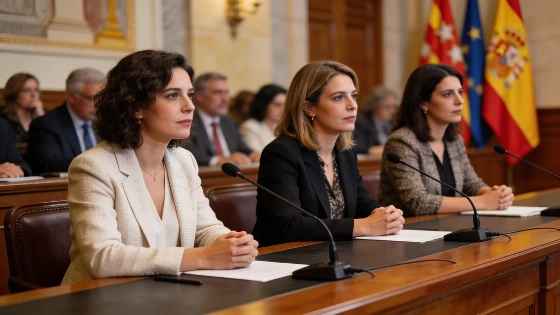
The Spanish government is sending three more ministers to Congress to explain their handling of the recent migrant surge in Ceuta, intensifying political scrutiny over the crisis. Mónica García, Minister of Health, Elma Sáiz, Minister of Inclusion, Social Security and Migration, and Sira Rego, Minister of Youth and Children, have each requested to appear before their respective parliamentary commissions. Their interventions are scheduled for the final week of August, with García set for the 27th and Sáiz for the 28th, while Rego is finalizing her date.
This move comes as the government faces growing demands for transparency following the mass entry of migrants into the autonomous city at the end of July and into August. The opposition Partido Popular (PP) has pressed for detailed explanations, particularly from the Ministry of Health, after raising a series of formal requests for information and clarification. The government, however, maintains that these appearances are not a reaction to PP's tactics in the Senate, but a necessary step given the seriousness of the situation and the need for thorough preparation.
The upcoming sessions will add to those already confirmed for other key ministers. Starting August 25, Fernando Grande-Marlaska (Interior), José Manuel Albares (Foreign Affairs), Margarita Robles (Defence), and Félix Bolaños (Presidency and Justice) will also address Congress on the Ceuta issue. According to government sources, the coordinated approach is intended to provide a comprehensive account of the state's response, rather than a fragmented or reactive one.
Political tensions have escalated sharply in recent days, especially between PP officials and the central government. The president of Ceuta, Juan Jesús Vivas, has notably intensified his criticism, culminating in an extraordinary statement on Monday. He accused the government of "almost absolute passivity" and implied that Prime Minister Pedro Sánchez might be willing to cede sovereignty to Morocco, warning that he could turn to the judiciary if the situation does not improve. This rhetoric reflects a broader climate of confrontation, as highlighted in recent coverage such as the analysis of institutional clashes over Ceuta hearings in the Senate, available through this detailed report.
Ceuta, a Spanish enclave on the North African coast, has long been a focal point for migration flows from Morocco and beyond. The latest influx has reignited debates over border security, humanitarian response, and Spain's diplomatic relations with Morocco. Parliamentary appearances by ministers are a rare but significant measure, signaling the gravity of the crisis and the government's intent to address both public concern and political opposition. The outcome of these sessions may influence not only the immediate management of the Ceuta situation but also broader migration and border policies in Spain. The events underscore the complex interplay between local authorities, national government, and international partners in managing migration challenges at Spain's external borders.