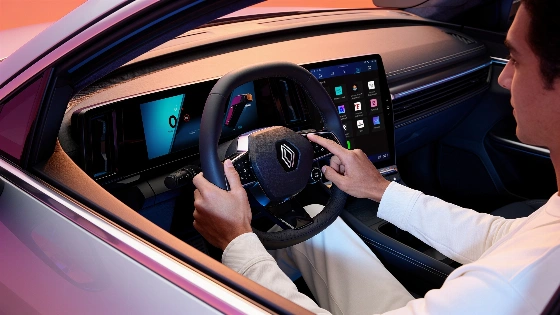
A Swedish investigation reveals that new car touchscreens demand more driver attention than older models, raising concerns about road safety. Despite technological advances, tasks now take longer and distract drivers for greater distances.
Modern car dashboards have become dominated by touchscreens, but new research from Sweden suggests this trend may be undermining road safety. According to a recent study by the automotive magazine Vi Bilägare, drivers using the latest infotainment systems took longer to complete basic tasks compared to those using older models, increasing the risk of distraction behind the wheel.
The study assembled ten new vehicles alongside a 2016 Volvo V60, asking drivers to perform everyday actions such as adjusting climate controls, changing radio stations, and modifying screen brightness while driving at highway speeds on a closed airfield. The results were clear: the average time and distance required to complete these tasks have grown, not shrunk, with newer technology.
Longer Tasks, Greater Distraction
Data from the test showed that the average distance covered while interacting with a touchscreen rose from 756 meters in 2022 to 813 meters in the latest round. This translates to roughly two additional seconds of attention diverted from the road, a significant increase given that a car traveling at 96 km/h covers 27 meters every second. The findings indicate that, despite manufacturers' efforts to improve interface design, the latest systems have not reduced distraction.
Vi Bilägare noted that while screens have become larger and are often better positioned, and while hardware and software updates have brought sharper graphics and supposedly more intuitive menus, these changes have not translated into safer or faster operation. In fact, the study found that the new Mercedes CLA, equipped with the brand's latest operating system, required drivers to spend an average of 35 seconds interacting with the screen to complete the set tasks—15 seconds longer than the Mercedes GLB tested in 2022. The CLA also took 19 seconds to respond after unlocking, and drivers covered an average of 1,116 meters during these interactions, second only to the Mazda CX-60's 1,137 meters.
The best performer among the 2026 models was the Volvo XC60, but even it required drivers to travel 485 meters per task—still 68 meters more than the Volvo C40 Recharge managed in 2022. Notably, a Tesla Model Y outperformed the Model 3 from the previous test, and the 2026 XC60 did better than the 2016 V60, which relied more on physical controls. However, a Volvo V70 from 2005, tested in 2022, still surpassed the 2016 model, highlighting the potential benefits of simpler, analog interfaces.
Why Automakers Favor Screens
The shift toward digital dashboards began in the late 1990s with luxury vehicles and has since become the industry standard. The 2010s saw a rapid replacement of physical buttons with touch controls, digital instrument clusters, and even touch-sensitive steering wheels—though some brands have since reversed course on the latter.
Many driving enthusiasts and car lovers remain skeptical of this technological shift, citing not only increased distraction but also ergonomic drawbacks. Physical buttons once allowed drivers to adjust audio or climate settings by feel, without taking their eyes off the road. Touchscreens, by contrast, demand more visual attention and can be less intuitive to use.
Despite the perception that digital dashboards are a luxury feature, the reality is that touchscreens are often cheaper for manufacturers to produce. Replacing individual buttons and wiring with a single screen reduces costs, even as it allows brands to market vehicles as more high-tech and, in many cases, raise prices. The influx of technology companies into the automotive sector has further accelerated this trend, turning cars into rolling computers and aligning with regulatory requirements for advanced driver assistance systems (ADAS).
Industry Context and Implications
The findings from Sweden echo earlier warnings from the University of Washington and the Toyota Research Institute, both of which have highlighted the safety risks associated with complex infotainment systems. The debate over touchscreens is not limited to safety; it also touches on comfort, usability, and the evolving definition of luxury in the automotive world. For example, the Mercedes GLC 400 EQ 4Matic, recently reviewed for its comfort and travel credentials, demonstrates how brands are balancing digital innovation with traditional expectations of ease and refinement (see our analysis of Mercedes' approach to comfort and technology).
As car interiors become increasingly digital, the challenge for manufacturers will be to reconcile cost-saving measures and technological progress with the fundamental need for safety and intuitive operation. The Swedish study suggests that, for now, the promise of smarter dashboards has yet to deliver on its most important goal: keeping drivers focused on the road.