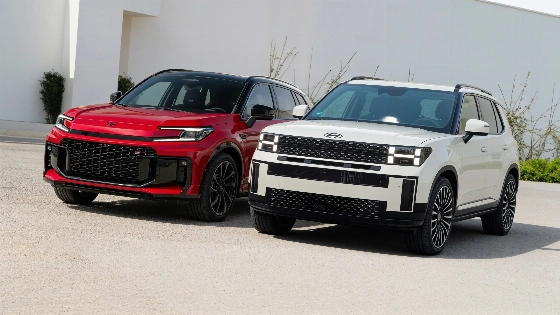
Toyota’s RAV4 Plug-in Hybrid now offers over 100 km of electric range, while Hyundai’s Santa Fe brings seven seats and a cavernous boot. Both wear the CERO label, but their strengths differ. Here’s how they compare for Spanish buyers.
Choosing between the Toyota RAV4 Plug-in Hybrid and the Hyundai Santa Fe Plug-in Hybrid in 2026 means weighing electric range against sheer space. Both SUVs carry Spain’s coveted CERO emissions label, but their priorities are sharply different—one is built for efficiency, the other for family versatility.
Electric Range vs. Space
The latest Toyota RAV4 arrives with a clear mission: maximize electric driving. Its plug-in hybrid version now claims over 100 kilometers of WLTP-rated electric range, thanks to a 23 kWh battery—one of the highest figures in its class. Prices start at €47,075, including manufacturer promotions, making it a compelling option for those who want to minimize fuel stops and emissions in daily life.
By contrast, the Hyundai Santa Fe leans into size and practicality. The fifth-generation model, launched at the end of 2024, stretches to 4.83 meters in length and offers genuine seven-seat capacity. Its plug-in hybrid system pairs a 1.6 T-GDi turbo petrol engine with an electric motor for a combined 288 hp, and a 13.8 kWh battery delivers up to 55 kilometers of electric range—noticeably less than the RAV4, but still enough for most urban commutes. The Santa Fe starts at €49,910 with discounts and trade-in incentives.
Design and Interior
Toyota’s RAV4 adopts a modern, assertive look, with C-shaped headlights and a bold front grille. Inside, it feels robust and contemporary, featuring a 12.9-inch floating touchscreen for multimedia and a 12.3-inch digital instrument cluster. Toyota keeps some physical buttons for key functions, though climate controls are mostly managed via the screen. Rear seat space is good, but the bench is fixed and the boot offers 446 liters—adequate, but not class-leading.
The Hyundai Santa Fe, meanwhile, stands out with its retro-inspired, boxy design and minimalist lines. The interior is exceptionally spacious, with clever storage solutions and multiple USB ports (12V and 230V). The seven-seat layout is standard in Spain, and the second row slides up to 25 cm for flexible legroom. The third row can accommodate adults comfortably, and both seats feature Isofix anchors for child seats. With five seats in use, the plug-in hybrid Santa Fe offers 621 liters of boot space—far ahead of the RAV4. Fold the seats, and capacity soars to 1,950 liters.
Performance and Equipment
The RAV4 Plug-in Hybrid comes in two power levels: 268 hp (front-wheel drive) and 304 hp (all-wheel drive), both using a CVT automatic transmission. Charging is flexible, with AC up to 11 kW and DC fast charging at 50 kW (10–80% in 30 minutes). Four trim levels—Advance, Spirit, GR Sport, and Limited—bring features like 18-inch wheels, heated front seats, and a digital cockpit as standard.
The Santa Fe’s plug-in hybrid setup always includes all-wheel drive and a six-speed automatic. While its 288 hp is slightly lower than the RAV4’s top spec, it’s more than enough for family duties. Standard equipment is generous, with five trim levels (Maxx, Techno, Style, Calligraphy, Calligraphy Green) offering adaptive cruise control, dual-zone climate, keyless entry, wireless charging, electric tailgate, and a suite of driver aids. The dashboard is dominated by two 12.3-inch screens joined by a curved panel, plus a third 6.6-inch display for climate and other controls.
Who Should Choose Which?
For buyers focused on electric range and lower upfront cost, the Toyota RAV4 stands out. Its 100 km electric capability and 304 hp all-wheel-drive option make it one of the most advanced plug-in hybrids on the Spanish market. However, the entry price advantage narrows if you want all-wheel drive, with the RAV4 4x4 priced at €49,075—almost matching the Santa Fe.
Families needing maximum space, seven real seats, and a huge boot will find the Hyundai Santa Fe hard to beat. Its sliding second row, adult-friendly third row, and flexible cargo area make it a true family hauler, even if its electric range is more modest.
Both models reflect a broader trend in the Spanish SUV market: plug-in hybrids are no longer niche, but mainstream choices for drivers who want zero-emissions capability without sacrificing practicality. The RAV4 and Santa Fe each target a different kind of buyer, but both show how quickly the segment is evolving.
For those tracking the evolution of family SUVs, it’s worth noting that other brands are also raising their game. Nissan, for example, has just refreshed its X-Trail with smarter connectivity and a rugged new Adventure trim—details can be found in this recent overview of the updated X-Trail.
Key Takeaways
The Toyota RAV4 Plug-in Hybrid leads on electric range and power, while the Hyundai Santa Fe dominates on space and family features. Both are eligible for Spain’s CERO label, offering tax and circulation benefits. As plug-in hybrids become more common, Spanish buyers have more real choices than ever—whether their priority is driving electric or carrying the whole family in comfort.