Harvard astrophysicist Avi Loeb was named chair of a UAP Science Advisory Council established in June 2026 to advise US agencies on scientific analysis of unidentified anomalous phenomena. Loeb leads Harvard’s Galileo Project, and about 20 additional scientists from US universities and research institutions are on the council. It is reported to review sightings and detections collected by the military and intelligence services, bringing academic researchers into an area traditionally handled through government and national-security channels. Launched at Harvard in 2021, Loeb’s Galileo Project uses scientific instruments to investigate alleged UAP observations.
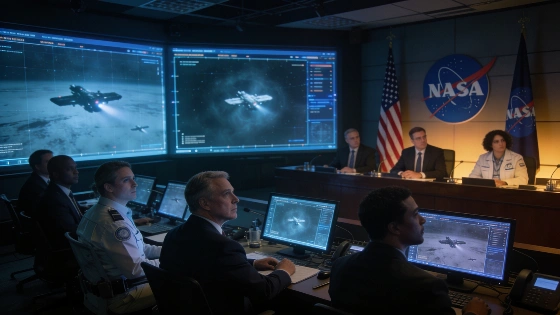
NASA Administrator Jared Isaacman has said the agency holds imagery of objects that remain unidentified based on the available data. “Based on the data that we have within that imagery, we don’t know what it is,” he said, information from Skeptical Inquirer. The statement describes an unresolved observation, not evidence of extraterrestrial origin. Isaacman has also urged an open-minded, evidence-based assessment of released UAP material, saying NASA should have “a seat at the table” in the government’s disclosure effort.
The disclosure initiative followed President Donald Trump’s call to identify and declassify relevant UFO and UAP records across government. NASA is reported to be part of the process, which has been associated with the name PURSUE, the Presidential Unsealing and Reporting System for UAP Encounters. The Pentagon has also released UAP files, including images and other records. As with any unresolved sensor observation, identification depends on the underlying data and its context: viewing geometry and sensor limitations matter, as do gaps in the surrounding information. Investigators may assess natural phenomena or adversary technology as possible explanations.
NASA’s 2023 independent UAP study forms part of the scientific backdrop to the new council. The broader aim is to improve the quality and consistency of data used to assess sightings, rather than treating the label “unidentified” as a conclusion about their origin. NASA has reported no evidence of crashed alien bodies or recovered spacecraft in the imagery discussed by Isaacman. The agency’s separate search for life beyond Earth includes Mars exploration, where samples being collected could eventually help researchers investigate whether microbial life existed there.
The council’s creation gives academic scientists a wider role in reviewing military and intelligence observations, alongside consideration of potential national-security implications. Its reported membership, Loeb and about 20 other researchers, distinguishes it from operational government UAP investigation offices. The initiative signals expanded inquiry and a push for disclosure, not a government finding that UAP are extraterrestrial technology.
In US government usage, UAP has broadened the older term UFO, or “unidentified flying object,” to encompass anomalous observations that may not be limited to objects in flight. The distinction is basic to the current debate: an observation can remain unexplained because the evidence is incomplete, without establishing that it is non-human technology. NASA Administrator Jared Isaacman has framed the agency’s role as examining the evidence while pursuing basic questions about whether life exists elsewhere.