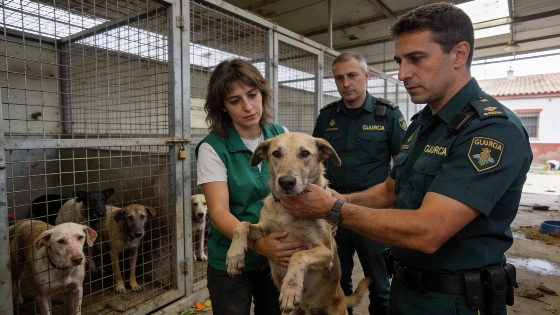
Guardia Civil has launched an investigation into two men after discovering severe neglect at a dog training school in Navalcarnero. Authorities found 46 dogs, many in critical health, and one dead animal on site.
Authorities in Navalcarnero, a town southwest of Madrid, have opened a criminal investigation against two men who owned a local dog training school. The Guardia Civil intervened after receiving multiple complaints from neighbors about the deteriorating state of the facility and the apparent lack of food and water for the animals housed there. Upon inspection, officers discovered 46 dogs living in poor conditions, with nine requiring immediate hospitalization due to extreme thinness, anemia, or dehydration. The body of a deceased dog was also found inside the premises.
The investigation began in June, following a series of reports highlighting the facility's severe deficiencies. According to the Guardia Civil, the site was in a state of neglect, with many animals showing signs of illness, parasites, and untreated injuries. The authorities seized all 46 dogs, and the most critical cases were transferred to veterinary hospitals for urgent care. The two men, identified as the owners of the school, have been formally placed under investigation for alleged animal abuse and have already appeared before a judge. The facility has since been closed by order of the authorities.
Spanish law imposes strict penalties for animal abuse. For cases involving injury or basic mistreatment of domestic animals, offenders can face prison sentences ranging from three to eighteen months, or fines of six to twelve months, if the animal requires veterinary treatment. Additionally, those convicted may be banned from working with or owning animals for one to three years. If the abuse results in the animal's death, the prison term increases to twelve to twenty-four months, and the ban can extend up to four years.
This incident in Navalcarnero comes amid growing public concern over animal welfare in Spain. Recent years have seen increased scrutiny of animal-related facilities and more frequent interventions by authorities. In a related context, Madrid has also implemented advanced monitoring systems for urban wildlife, as seen when the city deployed AI-powered sensors to track bird and bat populations in key parks. This initiative, detailed in a recent report on Madrid's urban wildlife monitoring, reflects a broader trend toward stricter oversight and improved animal protection measures across the region.
Navalcarnero, with a population of around 33,000, is located approximately 31 kilometers from Madrid. The case underscores the ongoing challenges in ensuring animal welfare standards are met, particularly in private facilities. The outcome of the judicial process against the two owners may set a precedent for similar cases in Spain, as authorities continue to prioritize the enforcement of animal protection laws.