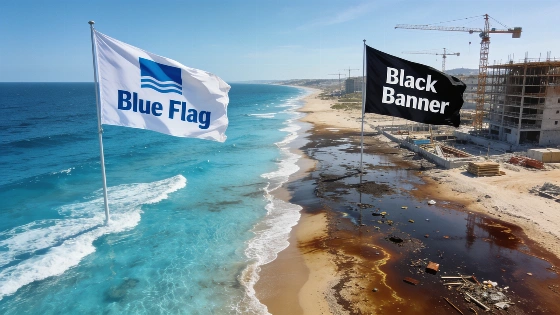
Granada’s celebrated coastline faces a setback as La Charca and Los Berengueles are singled out for serious environmental issues. Ecologistas en Acción highlights pollution and unchecked development, challenging the province’s recent Blue Flag success and raising questions about the future of these popular destinations.
La Charca in Salobreña and Los Berengueles in Almuñécar, two of Granada’s most renowned beaches, have been named in the 2026 Black Banners report by Ecologistas en Acción. The environmental group’s annual assessment draws attention to severe pollution and environmental mismanagement, just weeks after the province celebrated a record 14 Blue Flag awards for beach quality.
La Charca, also known as El Peñón, has been flagged for recurring water contamination. According to the report, the beach faced two temporary bathing restrictions in 2025: one in August due to high levels of intestinal enterococci, and another in September after dangerous concentrations of Escherichia coli were detected. Ecologistas en Acción attributes these problems to untreated wastewater from buildings not connected to the sewage system, agricultural runoff from local irrigation channels, and multiple urban and industrial underwater outfalls.
The organization warns that these pollution episodes are not isolated incidents but part of a persistent pattern. They call for urgent upgrades to wastewater treatment, stricter controls on pesticide and herbicide use in local waterways, and a halt to new construction permits in areas lacking proper sanitation infrastructure.
Urbanization Threatens Los Berengueles
Los Berengueles, near the Marina del Este marina, has been singled out for environmental mismanagement linked to a new real estate development. The report criticizes the loss of native vegetation, extensive earthworks, and the visual impact of ongoing construction. The proximity of these works to protected areas, including the Maro Cliffs and the Punta de la Mona marine reserve, raises further concerns.
Additionally, the development borders a zone where projects to restore the vulnerable coral species Dendrophyllia ramea are underway. The report also notes that some buildings in this coastal stretch still lack proper sewage connections, compounding the environmental risks.
Calls for Action
Ecologistas en Acción urges authorities to address the root causes of pollution at La Charca by overhauling the sewage system and eliminating sources of marine discharge. For Los Berengueles, the group advocates for a coastal management plan focused on conservation and restoration, as well as a moratorium on new developments in areas of high natural, scenic, or geological value.
The contrast between the recent Blue Flag accolades and the Black Banner warnings highlights the complexity of coastal management in Granada. While some beaches, such as La Guardia and Marina del Este-Los Berengueles, have been recognized for their amenities and water quality, the criteria for these awards differ significantly from those used by environmental watchdogs.
Granada’s situation is not unique. Across Spain, 48 beaches have received Black Banners this year, reflecting a broader tension between tourism-driven development and environmental protection. The challenge for local authorities and communities is to balance economic interests with the urgent need to safeguard fragile coastal ecosystems.
As the summer season approaches, the fate of these beaches will be closely watched—not only by residents and visitors, but also by those who value the long-term health of Spain’s coastline. For those interested in how coastal events can shape local identity and tourism, the recent revival of Corcubión’s medieval market offers a contrasting example of sustainable seaside celebration.