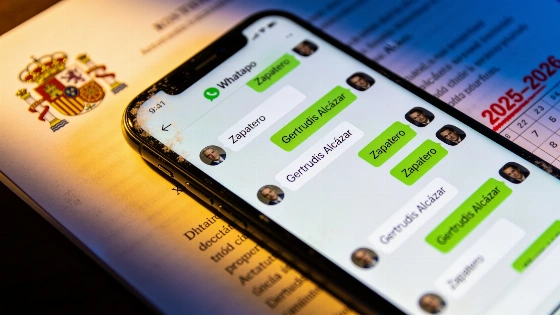
UDEF investigators have found extensive message exchanges between Zapatero and his secretary. The chats reveal how the former prime minister coordinated his agenda, meetings, and daily routines in 2025 and 2026.
Thousands of messages exchanged between José Luis Rodríguez Zapatero and his secretary, Gertrudis Alcázar, have been uncovered by the UDEF, shedding light on the meticulous management of the former prime minister's agenda throughout 2025 and 2026. The investigation reveals not only the scheduling of high-level meetings but also the handling of everyday tasks and personal routines.
Among the communications, a notable conversation from January 16 stands out. On that rainy morning, Zapatero instructed his secretary to deliver an envelope directly to "el presi" after informing her earlier that he would not be going for his usual morning run and needed to alert his security detail. He also arranged for a pick-up from his Las Rozas residence at 11:30 to attend scheduled appointments. The messages suggest that security staff often acted as intermediaries, passing documents and personal items between Zapatero and Alcázar.
The chats further illustrate how the former leader's daily life intertwined with official duties. Alcázar frequently referred to the security agents as "the boys" and coordinated with them to deliver items such as Zapatero's health card or written notes. In response to one such request, Zapatero clarified the need to hand over a specific envelope, highlighting the trust placed in his team for both personal and professional matters.
References to "el presi" appear repeatedly in the recovered messages. For example, in July 2025, Zapatero asked Alcázar to remind him about an upcoming meeting in León, seeking confirmation on the timing with "el presi." In September 2025, shortly before the arrest of his associate Julio Martínez, Zapatero updated his secretary about changes in his schedule following a meeting with "el presi," mentioning subsequent appointments with key government figures at the Ministry of Presidency in Moncloa.
The content of these exchanges paints a picture of a tightly managed agenda, where high-level political meetings were interspersed with reminders for everyday needs—ranging from buying medication and dental supplies to scheduling medical and hairdresser appointments. The messages also reveal Zapatero's direct involvement in organizing meetings, as seen in a November 2025 exchange where he boasted to Alcázar about personally arranging a gathering at Moncloa, prompting her to congratulate him on his initiative.
This detailed glimpse into Zapatero's communications comes at a time when internal party dynamics and leadership decisions are under scrutiny. The management of personal and official affairs through private channels echoes broader concerns about transparency and internal coordination, a topic also explored when a former PSOE insider prepared to testify independently, raising pressure on party leadership.
For context, the UDEF (Unidad de Delincuencia Económica y Fiscal) is Spain's specialized police unit focused on economic and financial crimes. Its investigations often bring to light the inner workings of political figures and their teams. The discovery of these messages not only documents Zapatero's approach to managing his post-presidential activities but also highlights the blurred lines between personal routines and official responsibilities at the highest levels of Spanish politics.