Urbaser is building a new plant in León to recycle up to 25,000 tons of lithium batteries a year. The company wants to recover valuable metals and cut Europe's need for imported raw materials. More sites are planned for Zaragoza, Castilla-La Mancha, and Portugal.
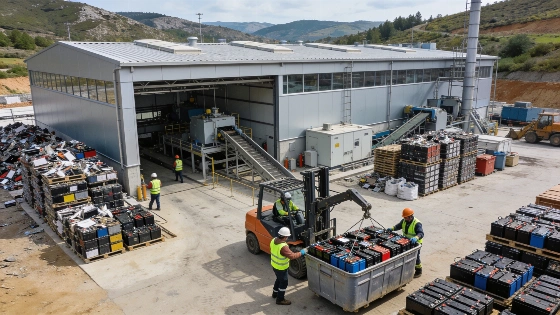
Construction crews are busy in Cubillos del Sil, León. Urbaser is putting up a large recycling plant there. The goal: handle up to 25,000 tons of lithium batteries every year. That covers between 60,000 and 200,000 batteries. Spain has never seen a project like this for battery waste. The country faces a flood of old batteries as electric cars, phones, and data centers multiply.
Urbaser is betting big on this shift. The company already collects batteries across Spain. It is building a logistics network to feed its new plants. León is just the start. Urbaser plans a bigger site in Zaragoza, aiming for 36,000 tons a year. Sites in Castilla-La Mancha and Portugal are also under review. The León plant should start commercial work in August 2027.
Urbaser received a €6.3 million subsidy from Spain's IDAE to support the León battery recycling plant, highlighting the project's alignment with national energy transition policies.
Europe is racing to switch to electric vehicles and renewables. That means more battery waste. The problem is not just cars. Lithium batteries power phones, laptops, tools, and solar panels. All of these will need safe disposal and recycling. Urbaser’s project answers the European Union’s call to cut reliance on imported critical materials. The EU wants more recycling done at home.
The process at Urbaser’s plant is detailed. First, workers safely receive and store used batteries. Next, the batteries are discharged and taken apart. Then, they are shredded in a nitrogen atmosphere. This step cuts fire and contamination risks. The result is a mix of aluminum, copper, plastics, and a powder called 'black mass.' That powder holds lithium, nickel, cobalt, and manganese. Urbaser will recover aluminum and copper for direct sale. But Spain does not yet have the plants needed to separate the metals from the black mass. For now, that step will happen in hydrometallurgical plants outside Spain.
Nicolás Corral, director of Development at Urbaser Soluciones Industriales, told EL ESPAÑOL-Invertia: “Nos están inundando de baterías y vamos a tener que tratarlas.” The company’s plan matches EU rules that say waste should be handled close to where it is made. This avoids risky and costly shipping of hazardous materials. Right now, much of Spain’s battery waste goes to central Europe. Tracking these shipments is difficult. Urbaser wants its new plants to fix that.
Urbaser recently underwent a major ownership change, with Blackstone Infrastructure and EQT Infrastructure completing the acquisition and appointing Carlos Albi as CEO. According to the company, Urbaser now serves over 64 million people, operates more than 150 treatment facilities, and employs over 38,000 staff in about 15 countries, embedding the battery recycling project within a large international circular economy platform.
The Cubillos del Sil project started as a way to bring new industry to a former mining area. Endesa was an early partner, but now Urbaser owns the plant fully. Machinery testing will begin in May 2027. Commercial operations are set for August. The Zaragoza project has filed its environmental paperwork. If all goes well with permits and the market, it could open by 2030. Urbaser is also looking at sites in Castilla-La Mancha and Portugal. Timelines there depend on demand and new rules.
Spain’s battery recycling system is still missing key parts. The country cannot yet process the black mass itself. That means the most valuable part of the battery must be sent abroad. Urbaser admits this is a problem. The company says Europe needs to build its own plants to finish the recycling loop. Right now, less than half of Spain’s dead batteries are recycled properly. Exact numbers are hard to find. Data is patchy and reporting is inconsistent. The new EU battery passport and stricter tracking rules could help show the real scale of the problem.
Urbaser’s move marks a shift for Spanish industry. Waste is now seen as a resource. The company is investing early, even with tough rules and logistics. That puts Urbaser in a strong spot as Europe scrambles for critical minerals. Battery waste is only going to grow. The ability to recover and reuse these metals will matter more each year. For now, Urbaser is taking a risk. It could set the standard for how Spain and its neighbors handle the coming wave of lithium batteries.