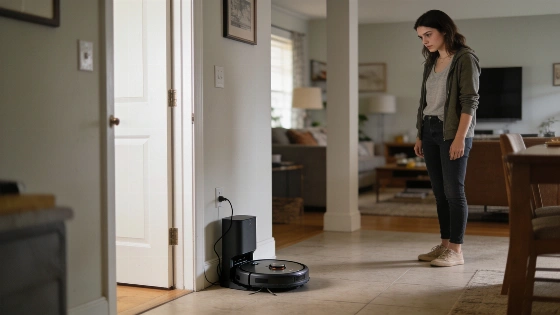
The US has blocked approval of new robot vacuum models made outside the country, citing cybersecurity and supply chain risks. Existing devices remain legal, but future imports face strict new rules. Major brands like Roborock, Dreame, and Xiaomi are affected.
From July 28, 2026, the United States has barred the approval of new robot vacuum models manufactured outside its borders, following a decision by the Federal Communications Commission (FCC) to update its Covered List. The move targets “advanced robotic devices” produced abroad, effectively halting the import, sale, and marketing of new models unless they meet strict domestic production standards or secure a rare exemption.
The FCC’s expanded definition now includes any device capable of moving across floors, avoiding obstacles, and navigating via sensors—criteria that clearly cover robot vacuums. Devices must also weigh over two kilograms with their base, operate remotely, and feature connectivity. The shape is irrelevant: a circular vacuum is treated the same as a humanoid robot. The new rules also apply to autonomous lawnmowers, delivery robots, and mobile warehouse machines, but exclude self-driving vehicles, trains, drones, underwater robots, regulated medical equipment, and fixed industrial arms.
This regulatory shift comes as Chinese manufacturers increase their presence in the home robotics market. Brands such as Roborock, Dreame, Ecovacs, Narwal, and Xiaomi are directly affected, since their latest products are made outside the US. The restriction is based on manufacturing location, not company nationality. Even Roomba, historically an American brand, is now impacted after iRobot’s acquisition by Chinese firm Picea in early 2026.
For consumers, the immediate impact is limited. Devices already approved by the FCC can still be sold, imported, and used as normal. Owners of existing robot vacuums face no new restrictions, and retailers may continue selling previously authorized models. The ban applies only to new models or updated versions requiring fresh FCC approval after July 28.
Manufacturers can still apply for conditional approval through the US Department of Defense, but the process is strict. Applications must detail company structure, supply chain origins, and plans for US-based production. Exemptions are granted only for specific models or lines, not entire brands. To qualify as “domestic” under 2026 rules, more than 65% of component costs must originate in the US—a threshold that could challenge even some American brands.
Concerns about data security are not theoretical. Earlier this year, a vulnerability in the DJI Romo robot vacuum allowed a user to access data from around 7,000 devices in 24 countries, including home maps and camera feeds. DJI has since patched the issue, but the incident highlighted the risks of remote access and data extraction. The FCC cited such vulnerabilities as justification for its decision, warning that sensors and connectivity in these devices could be exploited for surveillance or attacks on users and infrastructure.
The US approach differs from recent European measures targeting Chinese-made network equipment, focusing more on manufacturing origin and supply chain transparency. As the regulatory landscape tightens, manufacturers face a choice: adapt production to meet US standards or risk losing access to the American market. For now, the shelves remain stocked with existing models, but future launches may be delayed, relocated, or canceled if companies cannot comply.
For those interested in how regulatory changes can impact everyday technology, a recent case involving Spanish vehicle inspections shows how new rules can quickly affect consumers and businesses alike—details can be found in this report on upcoming ITV requirements for 2022 vehicles.
As the US tightens its grip on imported smart devices, the coming months will reveal whether global brands can adapt or if American homes will see fewer choices in robotic helpers.