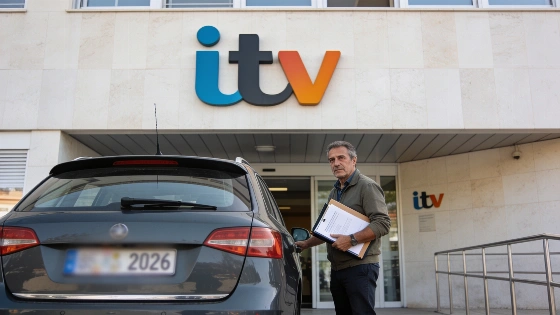
Spanish drivers with cars or motorcycles registered in 2022 must prepare for their first mandatory ITV inspection in 2026. Missing the deadline could mean a €200 fine, regardless of how often the vehicle is used or whether it is parked. Key details on affected license plates and inspection rules.
Drivers whose cars or motorcycles were registered in Spain during 2022 will soon face a crucial deadline: their first mandatory ITV inspection is due in 2026, exactly four years after registration. The Dirección General de Tráfico (DGT) has specifically highlighted vehicles with license plates ranging from LVV to MDF, urging owners to check their documentation and avoid the risk of a €200 fine for an expired inspection.
This requirement applies to all vehicles, regardless of how frequently they are driven or even if they remain parked for long periods. The law is clear: once a vehicle reaches the four-year mark, it must pass the ITV, or technical inspection, to remain legally on the road. Enforcement is strict—officers can verify inspection status through official vehicle records, not just by checking the windshield sticker.
Which Plates Are Affected?
The DGT has published an approximate calendar to help owners identify when their inspection is due. For 2026, the main affected series are:
- January: LVV to LWD
- March: LWR to LXD
- June: LYJ to LYZ
- September: LZZ to MBN
- December: MCR to MDF
These ranges are only a guideline. The exact deadline depends on the date of first registration, as shown on the vehicle’s official documents. Two cars with similar plates may have different inspection dates if registered on different days. Owners are advised to check their paperwork and not rely solely on the plate sequence.
It’s possible to complete the ITV up to 30 days before the official expiry without affecting the next inspection date. This flexibility allows drivers to book appointments in advance and avoid last-minute issues.
Inspection Frequency and Legal Framework
For private cars, the first ITV is required at four years. From four to ten years old, inspections are biennial. After ten years, the check becomes annual. These intervals are set by Real Decreto 920/2017, which also allows authorities to confirm inspection status via the central vehicle registry.
Other vehicle types, such as motorhomes, commercial vans, and mopeds, may have different inspection schedules based on their technical classification. For example, new rules for camper vans and motorhomes are set to take effect from 2026, as detailed in recent regulatory updates.
Fines and Sticker Rules
Driving with an expired ITV can result in a €200 fine, even if the vehicle is simply parked on a public street. If a vehicle fails the inspection, it may only be driven to a repair shop and back to the ITV station. A negative result means the car must be towed and cannot circulate under its own power.
It’s important not to confuse the €200 fine for an expired inspection with the separate penalty for not displaying the V-19 sticker. This sticker, which proves the vehicle has passed the ITV, must be placed in the upper right corner of the windshield. Failing to display it after a successful inspection is a minor infraction, carrying a fine of up to €100.
Why the ITV Matters
The technical inspection is more than a bureaucratic hurdle. According to AEMA-ITV, it plays a key role in road safety by detecting mechanical faults, safety system failures, and environmental issues before they lead to accidents. The process checks brakes, steering, tires, lights, emissions, seatbelts, and other critical components. Data from the association suggests that if all vehicles complied with ITV requirements, up to 353 additional lives could be saved each year.
Passing the ITV does not guarantee a vehicle will remain fault-free. Regular maintenance and prompt repairs remain essential, even between inspections.
Inspection Costs Across Spain
ITV prices vary widely by region. In Madrid, the average cost for a petrol or electric car is €34.20, while diesel vehicles pay around €42.73 and motorcycles €36.45, according to the Organization of Consumers and Users (OCU). Ceuta, the Basque Country, and Cantabria are among the most expensive regions, while Madrid, Andalusia, and Extremadura are more affordable for cars. For motorcycles, however, Madrid ranks among the pricier areas.
Drivers are not required to use an ITV station in the region where their vehicle was registered. Any authorized center in Spain is acceptable, offering flexibility for those who travel or relocate.
For those interested in the latest trends in vehicle technology and travel, the rise of compact electric campers like the ARI 458 Pro Camper is also shaping how Spaniards approach mobility and compliance with inspection rules. More details on this shift can be found in the article on the growing popularity of microcampers in Spain.