The US Supreme Court has stopped Donald Trump’s attempt to limit mail-in voting. The decision preserves access to postal ballots just weeks before the midterm elections. Only two conservative justices opposed the move.
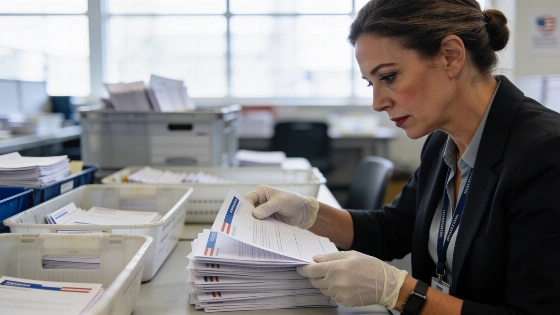
The US Supreme Court has rejected Donald Trump’s push to impose new limits on mail-in voting, refusing to reinstate a federal plan that would have changed the rules just before the November midterms. With ballots already going out in states like North Carolina, the court’s decision keeps the current system in place and blocks any last-minute changes that could have disrupted voting. On September 10, 2026, the 1st Circuit Court of Appeals declined to lift an injunction against the Trump administration’s new mail ballot rules, so the USPS cannot enforce them before the election, according to Reuters.
The Trump administration had issued an executive order in March requiring the US Postal Service to deliver ballots only to voters listed on newly compiled eligibility rolls. Trump justified the move with repeated, unproven claims that mail voting is vulnerable to fraud. Lower courts stopped the order, and now the Supreme Court’s refusal to intervene keeps that block in effect. The New York Times reports that the order would have forced USPS to accept mail ballots only if data came directly from state election officials—a requirement federal judges have now blocked twice in September.
The Hill estimates that states challenging the federal order plan to send out about 51 million mail-in ballots in the next two months.
Only two of the court’s six conservative justices dissented. Brett Kavanaugh wrote that, even if the Trump plan might be legal in the long run, there wasn’t enough time for states and local officials to put such sweeping changes in place before the election. The lack of legal clarity had already caused confusion among election officials, who warned that millions of voters could be disenfranchised by rushed and improvised postal procedures. Both AP and Reuters note that states had already started mailing ballots, and any abrupt rule change could have put the ongoing election process at risk.
States led by Democrats challenged the federal order, arguing that the US Constitution gives them—not Washington—control over how elections are run. Civil rights groups, including the American Civil Liberties Union, called the Supreme Court’s move a major win for voting rights. Sophia Lin Lakin, an ACLU attorney, accused the Trump administration of treating election rules as obstacles to its political goals. Reuters notes that the main legal argument from opponents was that states, not the federal government, have primary authority over election procedures—a point reflected in court filings and media reports.
Trump’s own use of mail voting adds some irony: despite his public criticism, he has repeatedly voted by mail himself, most recently in the Florida Republican primaries. His claims of fraud have been closely tied to his loss in the 2020 presidential race to Joe Biden. With polls showing Republicans struggling to keep control of Congress—especially the House—the stakes for voting access are high. If Democrats win, they have signaled plans to block Trump’s legislative agenda and may even pursue a third impeachment.
Reuters and The New York Times highlight that the Supreme Court's current stance is procedural rather than a final judgment on the merits. The Court is considering whether USPS can implement the rule before all legal challenges are resolved, and some conservative justices, including Brett Kavanaugh, have noted the lack of time to safely enact such sweeping changes before the election.
Postal service insiders warned that millions of ballots might not reach voters in time if new systems were rushed into place. State officials described the situation as chaotic, with legal uncertainty threatening confidence in the election. As reported earlier, the Supreme Court’s intervention prevents a last-minute overhaul that could have left voters in limbo.
This ruling sets limits on executive power over elections and reaffirms that states have the main role in organizing the vote. The Supreme Court’s decision is a clear signal that attempts to rewrite election rules at the last minute will face close judicial scrutiny. For now, mail-in voting rules remain unchanged, but the fight over how Americans cast their ballots is not over. The case highlights the ongoing tension between federal ambitions and constitutional boundaries, and shows that in the US, election rules are not easily changed by any one administration.