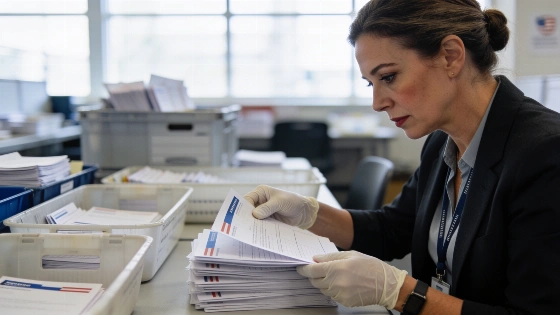
The US Supreme Court has rejected Donald Trump’s attempt to restrict mail-in voting. The move averts major disruption just weeks before Americans vote for Congress. The ruling exposes deep divisions over election rules and political strategy.
The US Supreme Court has stopped Donald Trump’s effort to tighten mail-in voting rules, just seven weeks before the country’s legislative elections. Seven of the nine justices, including three Trump appointees, sided against the proposed changes, blocking measures that could have disrupted the voting process this fall.
The court’s decision was short and direct. It refused to hear the Trump administration’s appeal of a lower court order that had already halted the president’s plan. Trump’s proposal would have required states to redesign ballots with individualized barcodes and upload voter lists to an online portal that wasn’t even ready. The majority of justices saw little chance the challenge would succeed. Justice Brett Kavanaugh, a conservative, noted that even if the changes were legal, there simply wasn’t enough time for state and local officials to put them in place before November. Many states had already started mailing ballots, making any last-minute overhaul impossible and risking voter disenfranchisement, according to Reuters.
Federal judges emphasized that the USPS has the authority to deliver mail, but not to impose new election administration procedures on states.
— Reuters
Trump has repeatedly claimed, without evidence, that mail-in voting leads to widespread fraud. At the same time, he has used mail ballots himself in recent elections. After returning to office last year, he signed an executive order directing the US Postal Service to overhaul the mail voting system. Civil rights groups, Democrats, and some Republicans objected, warning that millions of voters could lose access and that the changes were impossible to carry out so close to the election. AP News reported that the proposed rules included new verification steps and required states to share data with the USPS, which state officials said would have meant completely reworking their procedures.
Mail-in voting is now common across the US, used by voters from both parties. In 2024, about a third of voters used it, and in states like Utah, it’s the main way people vote. Printing and distributing ballots takes months, and some states had already sent them out. Trump’s plan would have forced states to scrap and redesign ballots mid-process, creating confusion and legal fights. The California Attorney General’s office noted that a coalition of 24 state attorneys general and Pennsylvania’s governor challenged the changes, calling them "draconian" and unlawful.
For Trump and his allies, restricting mail voting might have helped their chances of keeping congressional majorities. The Supreme Court’s ruling leaves the current system in place, so voters in every state can still use mail ballots. The timing matters, as the president faces political pressure over fuel prices and foreign policy setbacks, as covered in a recent report on US tensions in the Gulf.
By 2024, mail-in voting had become a widespread practice across the US, with some states like Utah seeing it as the primary method of participation. Court decisions have helped maintain stability and reduce the risk of confusion or disenfranchisement for millions of voters.
— AP News
This Supreme Court decision is more than a legal setback for Trump. It shows the limits of executive power, even with a court shaped by his own appointments. The failed push for last-minute voting changes highlights a miscalculation and a lack of attention to how US elections actually work. The ruling keeps the process stable for voters and officials, and shows that even aggressive political moves can be stopped when they threaten the basic functioning of democracy.