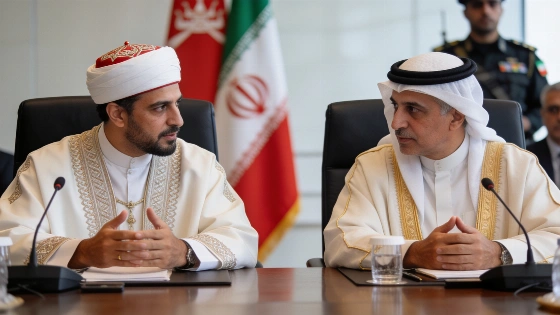
Tensions rise as Oman pursues a new agreement with Iran on the Strait of Hormuz. The US, led by Trump, threatens military action if Muscat disrupts its strategy. Gulf states watch closely as economic stakes grow.
Oman's recent diplomatic moves with Iran over the future of the Strait of Hormuz have triggered a sharp response from the United States. President Donald Trump has issued direct threats against the sultanate, warning of possible airstrikes if Muscat interferes with Washington's plans to maintain pressure on Tehran. This escalation comes as Oman and Iran reportedly finalize a deal that could reshape control and revenue from one of the world's most critical maritime corridors.
For decades, Oman has been recognized as a discreet and reliable mediator in the region, maintaining a careful balance between major powers. However, the current crisis has pushed Muscat to adopt a more assertive economic stance. The sultanate is now negotiating with Tehran to introduce a new system of tariffs for ships passing through the Strait, modeled on practices in other strategic waterways like the Strait of Malacca. This approach could generate significant long-term income for both Oman and Iran, as the strait's narrow waters are shared almost equally between the two countries.
Trump's administration, however, is determined to prevent any arrangement that might benefit Iran or undermine the ongoing blockade. According to British media, Oman has already consulted leading UK law firms specializing in maritime law to find creative solutions to the current impasse. While Iran has demanded the right to charge transit fees, Oman argues for open navigation but sees room for service-based charges related to navigation support, traffic management, and environmental protection. Such a system would not discriminate against any vessel and could improve safety and services in the corridor.
Muscat is also working to secure backing from other Gulf states, aiming to avoid friction with its Arab neighbors. Recent signals from Saudi Arabia suggest a willingness to accept a deal if it restores normal hydrocarbon exports and eases the region's economic strain. Yet, the US remains opposed, viewing Oman's initiative as a challenge to its strategy of isolating Iran. The economic impact of the conflict is already being felt globally, with higher energy prices and inflation affecting many countries, including Spain, where energy imports are a key concern.
The driving force behind Oman's current policy is Sultan Haithan Bin Tarik, who succeeded his cousin Qaboos in 2020. Haithan has continued his predecessor's tradition of diplomatic agility, maintaining relations with diverse actors such as the Houthi rebels in Yemen, Iran, Gulf monarchies, Israel, the US, and Russia. Despite exporting around 800,000 barrels of oil daily, Oman is not as wealthy as its neighbors and is actively pursuing economic diversification through its Vision 2040 plan, focusing on logistics, tourism, and agriculture.
Experts note that a new revenue stream from Hormuz tariffs could provide a much-needed boost for Oman. The country, often called the 'Switzerland of the Middle East' for its neutrality, has so far avoided the worst effects of the regional conflict, as its main oil ports are located outside the strait. This has allowed Oman to sidestep the severe financial difficulties faced by other Gulf Cooperation Council members.
In recent weeks, Sultan Haithan has intensified diplomatic efforts, meeting with leaders in Abu Dhabi and Doha to build consensus among Gulf monarchs. These visits, described locally as 'fraternal,' reflect a shared desire to resolve the Hormuz crisis. There is growing skepticism in the region about Trump's ability to deliver a solution, especially as the blockade continues to strain economies and disrupt energy flows.
Oman's diplomatic outreach has extended beyond the Gulf. On June 29, Sultan Haithan made a rare visit to France, the first by an Omani ruler in four decades. While the trip was officially economic, discussions with President Macron focused on the Iranian crisis and the future of the Strait of Hormuz. French officials expressed concern about the precedent set by a potential Oman-Iran agreement, but Muscat insists that its proposal is the only viable path out of the current deadlock.
This standoff over the Strait of Hormuz is not the only recent example of regional tensions drawing international attention. For instance, the ongoing crisis in Ceuta has also highlighted the complexities of diplomatic negotiations and the challenges faced by local authorities, as detailed in a recent report on Ceuta's political standoff.
The situation in the Strait of Hormuz remains fluid, with Oman's balancing act under intense scrutiny. The outcome of these negotiations will have significant implications not only for the Gulf but also for global energy markets and countries like Spain that rely on stable maritime trade routes. As the region waits for a breakthrough, the risk of further escalation cannot be ruled out.