Valencia's mayor revealed she first spoke with Carlos Mazón at 2:30 a.m. after the deadly dana. She stated she was not informed about the ES-Alert system. The investigation highlights gaps in crisis communication.
Valencia's mayor, María José Catalá, has told a court that she was not briefed about the ES-Alert emergency notification on the night a catastrophic dana struck the region in 2024, leaving 230 dead. Her testimony, delivered in Catarroja, has intensified scrutiny of how regional and local authorities coordinated their response during one of the deadliest weather disasters in recent Spanish history.
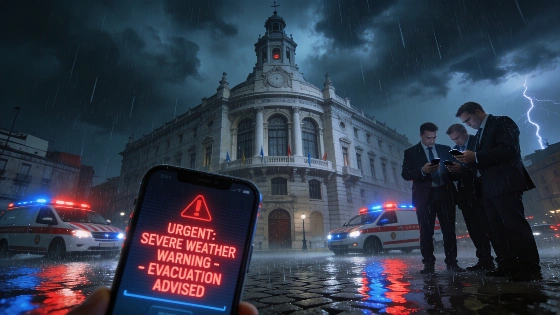
According to Catalá, her first direct phone conversation with then-president of the Generalitat Valenciana, Carlos Mazón, occurred at 2:30 a.m., hours after the main crisis decisions had already been made. By that time, the regional crisis committee (Cecopi) had sent out the ES-Alert—a mass notification to mobile phones—at 20:11, when most of the missing had already lost their lives. Catalá reported that she had previously messaged Mazón at 23:13 to update him on severe flooding in Pinedo, a Valencia district. Mazón, after receiving her message, referred her to Salomé Pradas, the then regional justice and interior minister, who is now the main figure under investigation in the case.
The mayor stated that no one from the Generalitat explained the ES-Alert system to her or informed her that such a message was being drafted. She emphasized that she only received the alert as a recipient, not as a participant in its creation or dissemination. Catalá also noted that she was not contacted by any Generalitat officials regarding the scale of the disaster, highlighting a lack of direct communication between regional and municipal authorities during the critical hours.
Regarding the city's involvement in Cecopi, Catalá acknowledged that the Valencia City Council did not connect to the committee's videoconference during the night of the disaster, though they were contacted in the days following the floods. Official records from October 29, 2024, indicate that Valencia's fire department was summoned to participate in the crisis response but ultimately did not attend. The mayor recalled that municipal teams, including firefighters using boats from the local yacht club, were forced to intervene in the La Torre neighborhood, where nine people died in a garage as floodwaters rose rapidly.
While Catalá's testimony brought renewed attention to Mazón's role, she avoided offering a full defense of the former president. Notably, during a parliamentary inquiry in June 2025, she had previously described Mazón as the only official to accept political responsibility for the tragedy, but in court she refrained from repeating that endorsement. Mazón, who resigned in November 2024, remains protected by parliamentary immunity as a regional deputy.
The investigation, led by Judge Nuria Ruiz Tobarra, continues to focus on the timing and effectiveness of the ES-Alert system, as well as the broader failures in crisis management. The case has drawn comparisons to other recent disasters where state response was questioned, such as the situation in Venezuela, where civil society stepped in after an earthquake exposed gaps in official action.
Spain's ES-Alert system, designed to provide rapid warnings to the public during emergencies, was implemented nationally in 2022. Its effectiveness depends on timely activation and clear communication between regional and local authorities. The 2024 dana in Valencia has become a test case for how these protocols function under extreme pressure. The ongoing judicial inquiry is expected to influence future emergency procedures and clarify the responsibilities of both regional and municipal leaders in crisis situations.